 May 2026
remnants of a home
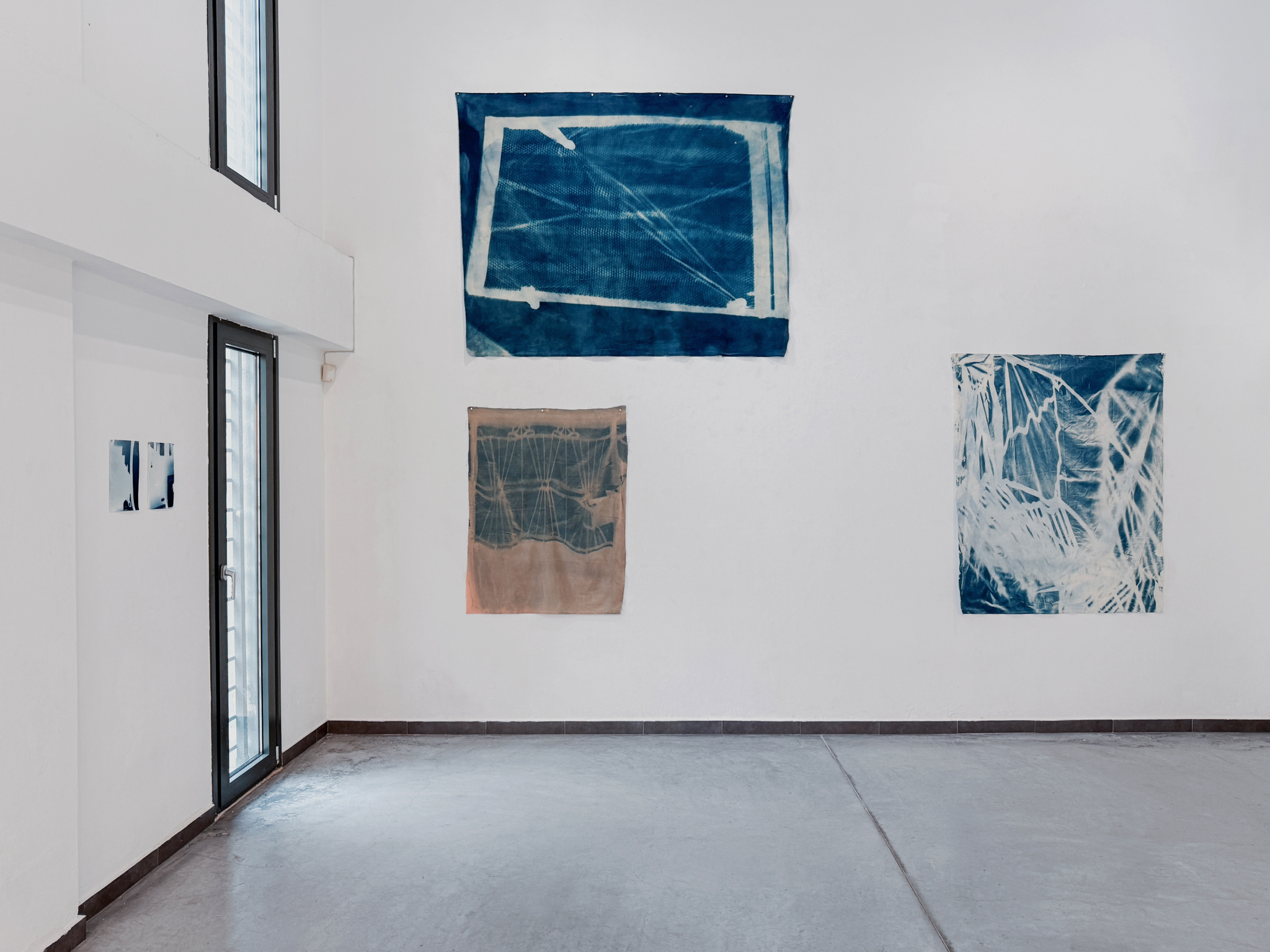
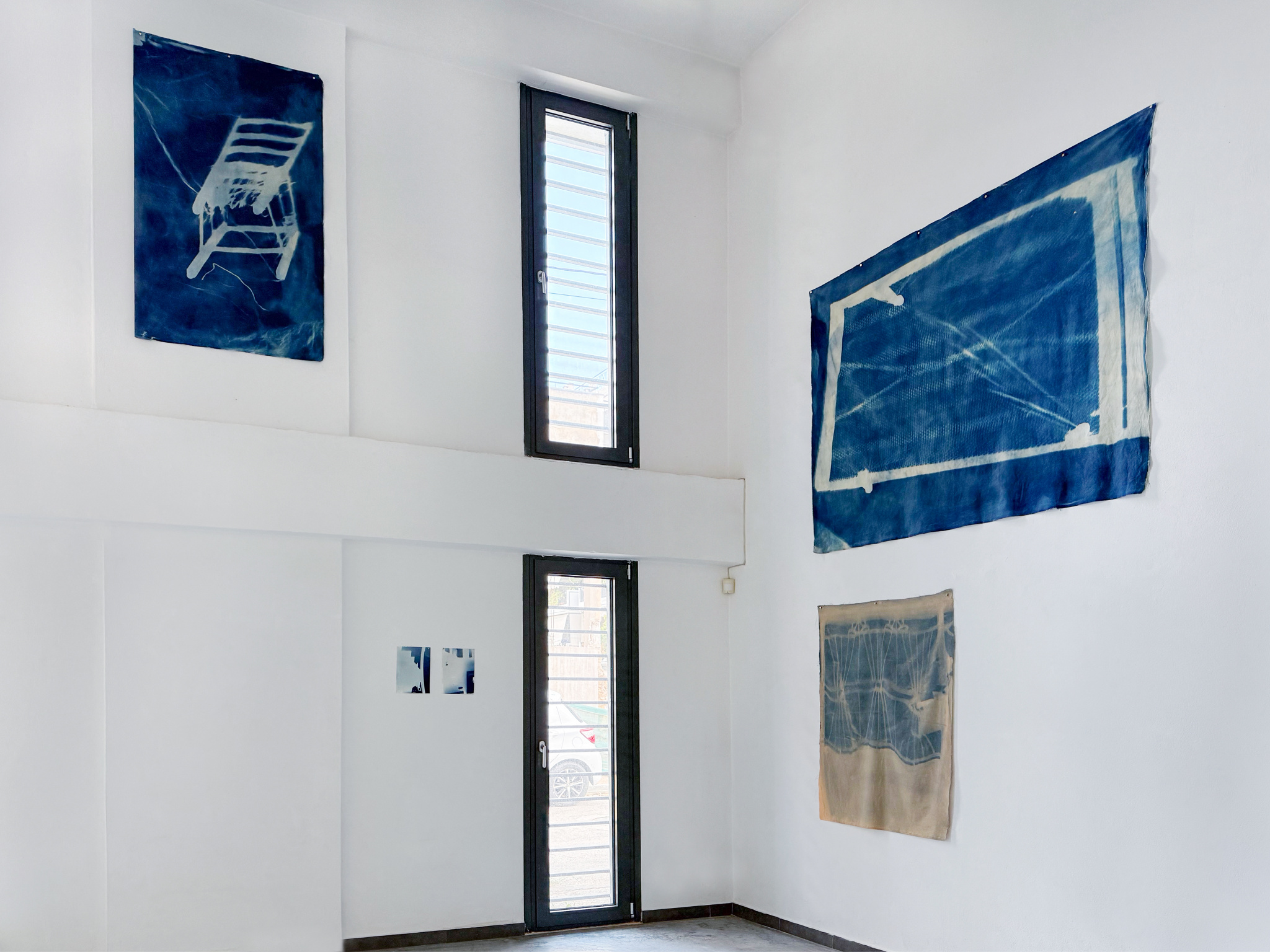
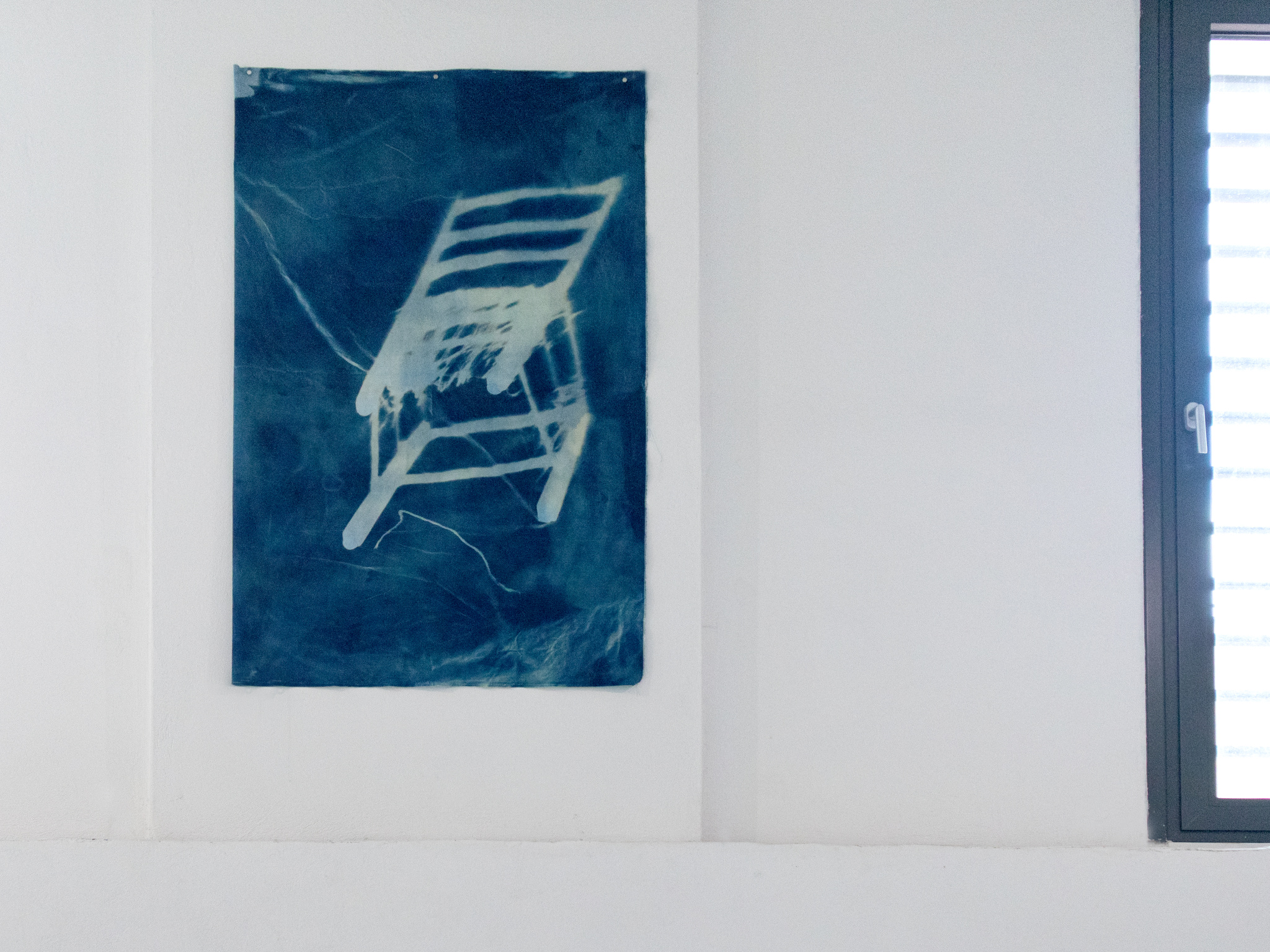
Exhibition view, remnants of a home, open studio at yellow brick, Athen/ Nea Ionia
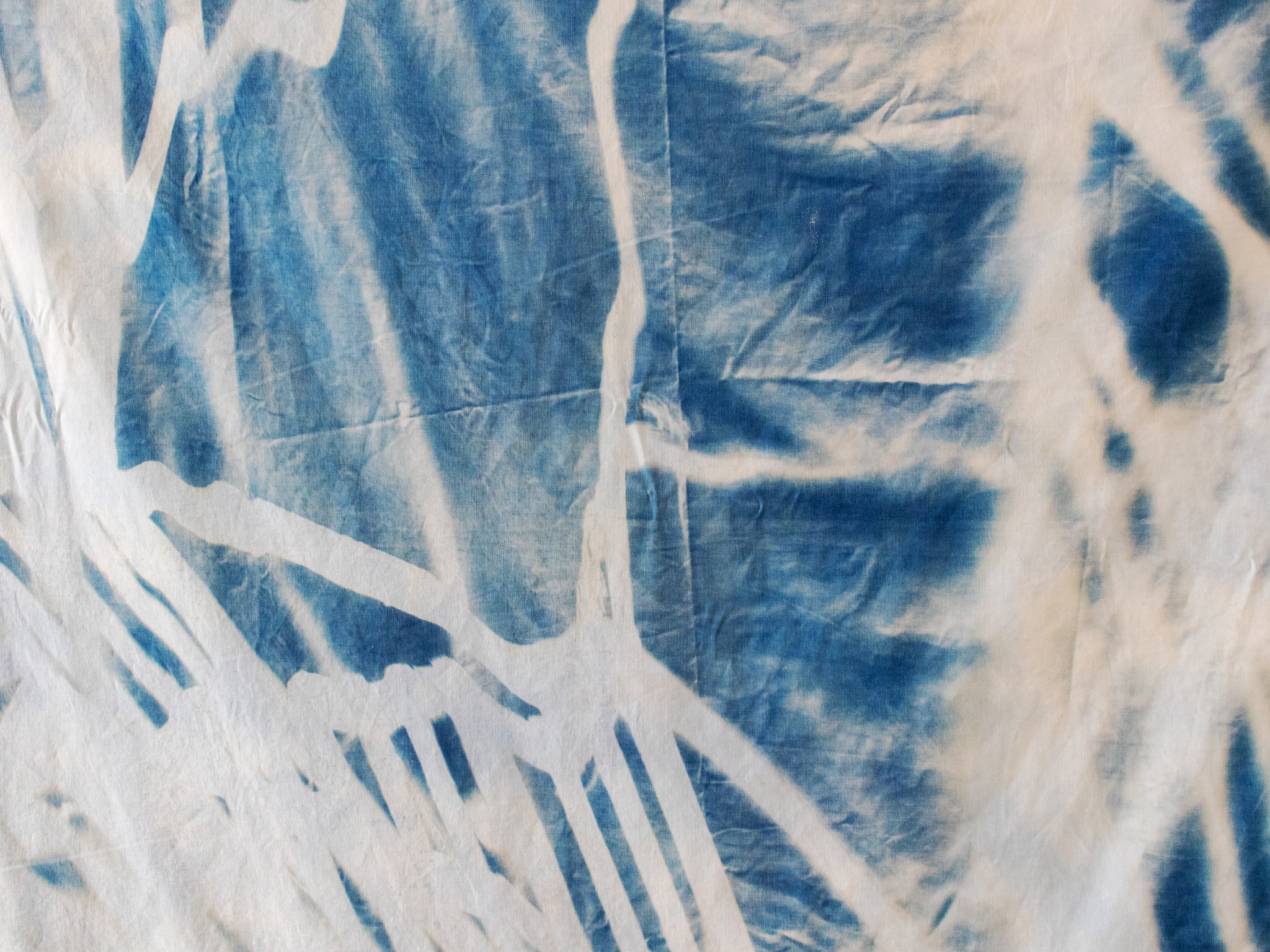
Detail view, remnants of a home, open studio at yellow brick, Athen/ Nea Ionia
Exhibition view, remnants of a home, open studio at yellow brick, Athen/ Nea Ionia
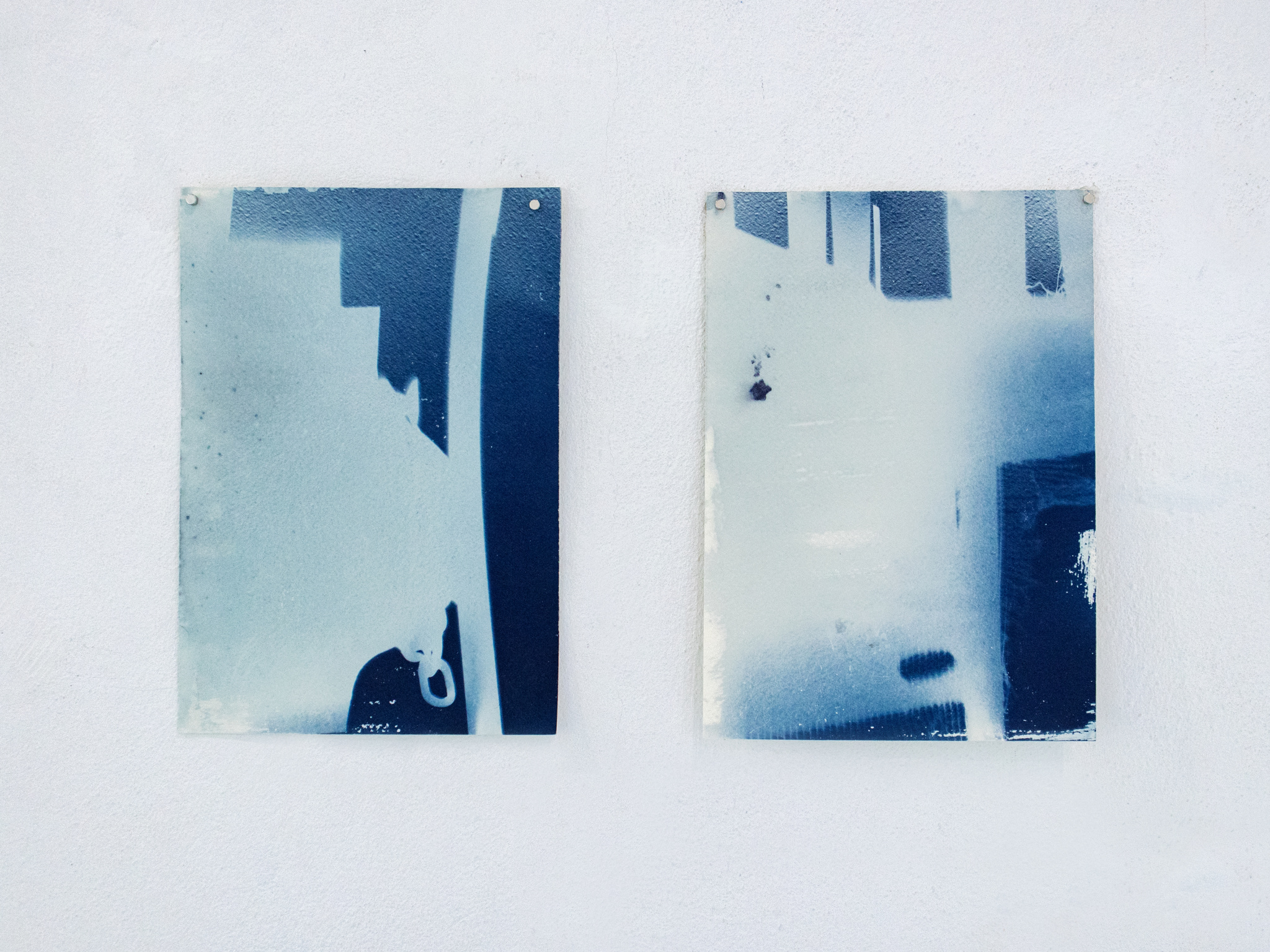
Detail view, remnants of a home, open studio at yellow brick, Athen/ Nea Ionia
Detail view, remnants of a home, open studio at yellow brick, Athen/ Nea Ionia
6 cyanotypes on various fabrics and watercolour paper, various sizes
200 x 140 cm, 150 x 130 cm, 140 x 110cm, 130 x 110cm, 24 x 30cm
Françoise Caraco explores belonging as a dynamic system composed of fragmented narratives and rituals, everyday gestures, and the shifting rhythms of time.
During her three-month residency at Yellow Brick, she focused on the Nea Ionia district, which was built on the outskirts of Athens in the 1920s to accommodate the numerous Hellenic refugees from Asia Minor affected by the population exchange between Greeks and Turks following the Treaty of Lausanne in 1923. Nea means ‘new’ and Ionia refers to Asia Minor.
Many of the small houses originally built for refugees in Nea Ionia now stand empty or have fallen into disrepair. Others have been demolished to make way for larger, more modern homes. The neighbourhood is changing rapidly, and with it, the stories of loss and suffering, and the search for a new identity and home that these houses represent, are disappearing.
From an artistic perspective, Françoise Caraco was interested in the memories that these abandoned refugee houses still hold within them. To this end, she looked for architectural features or objects left behind that tell the story of these once-new homes.
Using the cyanotype process, Françoise Caraco created delicate, light-sensitive prints that capture the architectural details of the refugee shelters built in Nea Ionia for those displaced from Asia Minor. For example, the pattern of a old spiral staircase or the grille of a locked front door. The cyanotypes capture the vibrant textures and, with them, the individual stories hidden behind the originals.
The universal title of the work, ‘Remnants of a Home’, refers to the constant state of being on the move, for to this day the Treaty of Lausanne serves as a blueprint for ongoing exclusion, displacement or even annihilation on the grounds of religion and nationality.
Furthermore, Françoise Caraco uses cyanotypes to document the rapid transformation of this neighbourhood. Even in the last three months, she has not had enough time to capture all the planned subjects in light prints, as many buildings are currently being demolished. In this way, Caraco also captures how the traces of a bygone era in Nea Ionia are disappearing and fading away. The vibrant textures of these cyanotypie prints evoke memories and a sense of belonging, whilst the buildings themselves are gradually disappearing. What kind of home do they bring to mind?
March 20263 months residency Athen
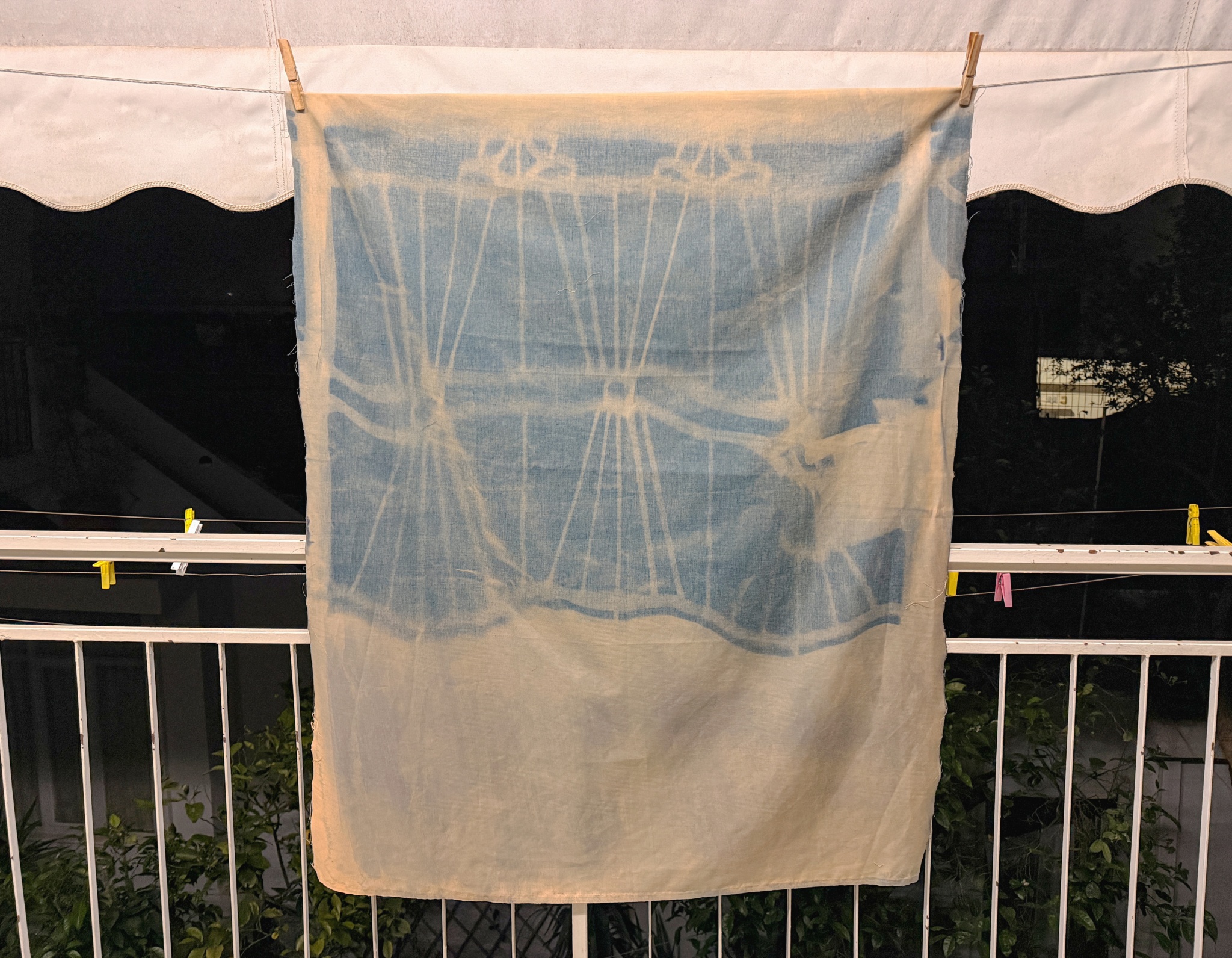
Cyanotypy print on textile, Remnants of a home, 2026
Yellow Brick is an independent cultural institution of contemporary art that has been active in the district of Nea Ionia, Attica, since 2016.
April 2023Tandem im Turm

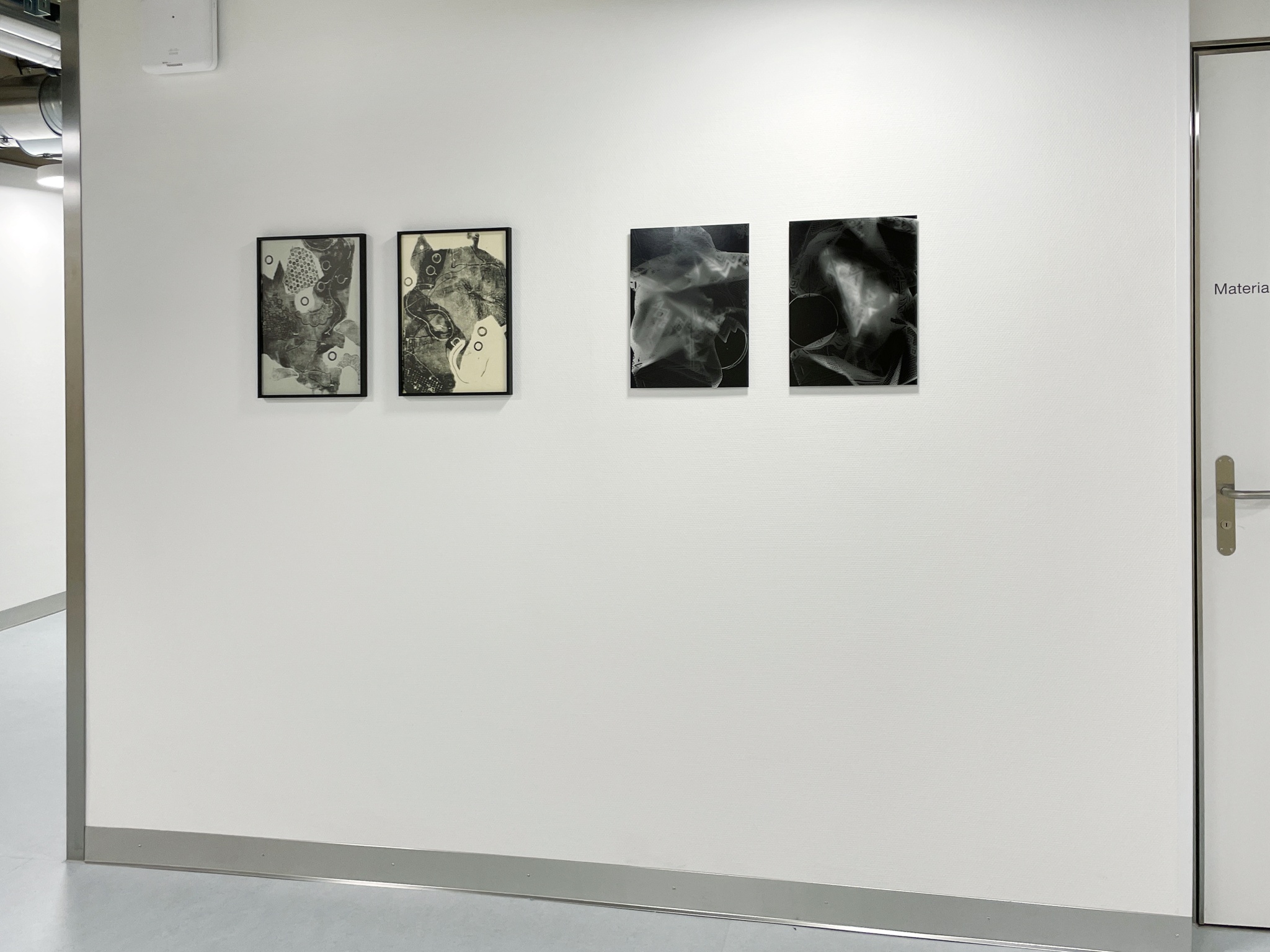


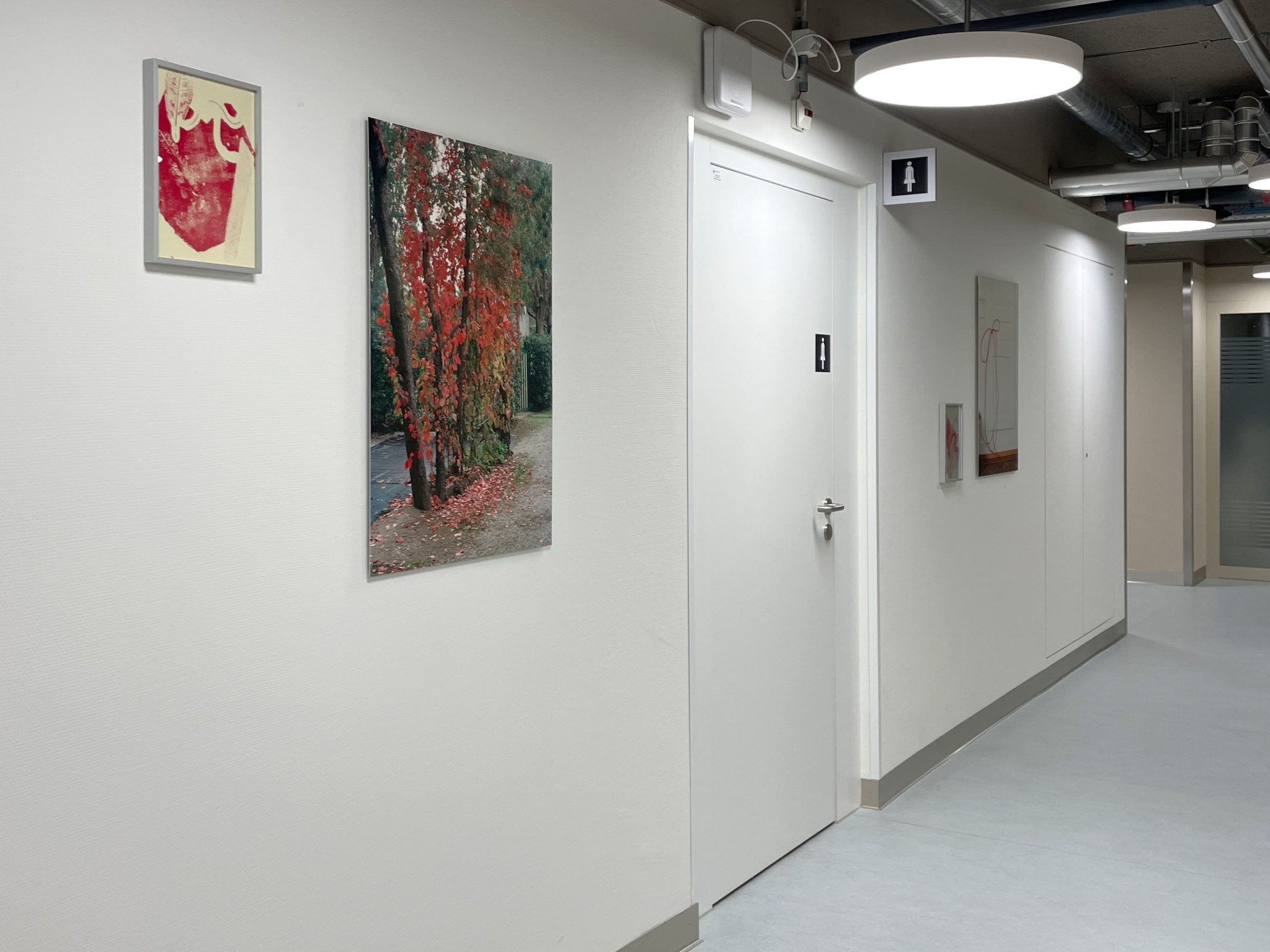
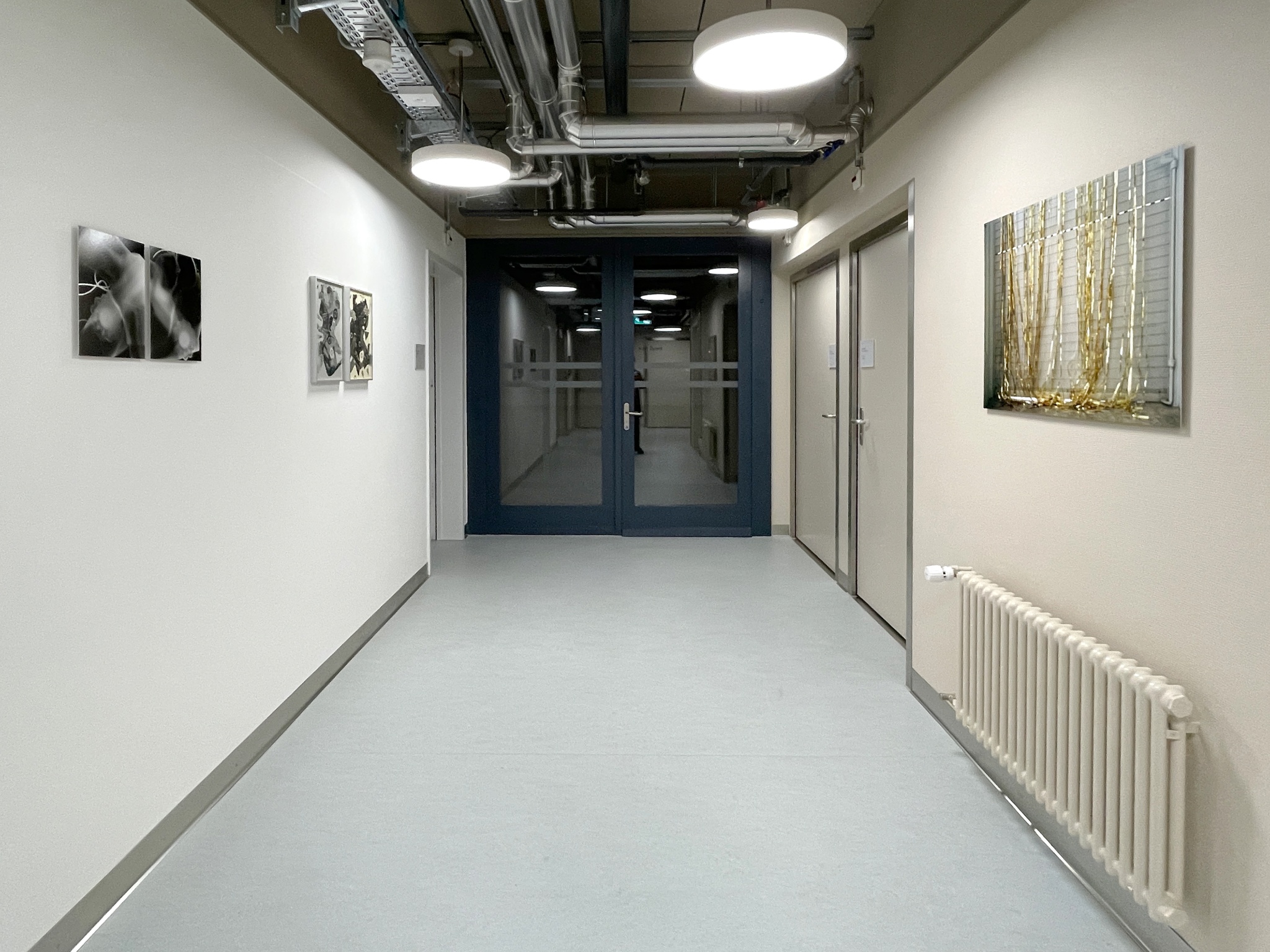
Exhibition view, Tandem im Turm, Stockwerk G, with Karin Kurzmeyer, Stadtspital Zürich Triemli / House 2, Kunsthaus Aussersihl in cooperation with Kunst und Bau Zürich, 2023-2025
Exhibition view, Tandem im Turm, Stockwerk G, with Karin Kurzmeyer, Stadtspital Zürich Triemli / House 2, Kunsthaus Aussersihl in cooperation with Kunst und Bau Zürich, 2023-2025
Exhibition view, Tandem im Turm, Stockwerk G, with Karin Kurzmeyer, Stadtspital Zürich Triemli / House 2, Kunsthaus Aussersihl in cooperation with Kunst und Bau Zürich, 2023-2025
Exhibition view, Tandem im Turm, Stockwerk G, with Karin Kurzmeyer, Stadtspital Zürich Triemli / House 2, Kunsthaus Aussersihl in cooperation with Kunst und Bau Zürich, 2023-2025
Exhibition view, Tandem im Turm, Stockwerk G, with Karin Kurzmeyer, Stadtspital Zürich Triemli / House 2, Kunsthaus Aussersihl in cooperation with Kunst und Bau Zürich, 2023-2025
Exhibition view, Tandem im Turm, Stockwerk G, with Karin Kurzmeyer, Stadtspital Zürich Triemli / House 2, Kunsthaus Aussersihl in cooperation with Kunst und Bau Zürich, 2023-2025
Fotografien; Inkjet auf Barytpapier, aufgezogen auf Aluminium 60 x 85 cm oder 85 x 120 cm
Fotogramme; Barytpapier, aufgezogen auf Aluminium 45 x 30 cm oder 30 x 24 cm
Mit dem Anliegen, Kunst an den unterschiedlichsten Orten sicht- und erfahrbar zu machen, realisiert das Kunsthaus Aussersihl temporäre Ausstellungen und Projekte, bei deren Umsetzung die künst le risch-kuratorische Kollaboration sowie die Rolle der «Gastgeberschaft» zentrale Motive darstellen. Die Ausstellung «Tandem im Turm» fusst auf Hospi tality und wurde für die im Haus 2 neu angesiedelten Ambulatorien kon zipiert. Auf den Stockwerken C und D sowie F bis M haben die Mitglieder des Vereins Kunsthaus Aussersihl auf je einer Etage Gast künstler:innen zu einer dialogischen «Tandemfahrt» ein geladen. Das befruchtende Potenzial der direkten künstlerischen Zusammenarbeit hat jedes Tandem in kuratorischer Eigenregie genutzt. Entstanden sind
neun eigenständige Inter ventionen, die zu individuellen Kunst erlebnissen einladen. Die Werke sind käuflich. www.kunsthausaussersihl.ch Françoise Caraco & Karin Kurzmeyer
Für das Konzept «Tandem im Turm» haben Françoise Caraco und Karin Kurzmeyer einen vertieften Dialog zwischen ihren jeweiligen Arbeiten entstehen lassen. Caraco zeigt eine Auswahl analoger Fotografien, welche sie seit 2003 fortlaufend erweitert. Für das Stockwerk G wählt Caraco explizit Fotografien aus, die Ein- und Ausblicke festhalten, um den geschlossenen Korridoren entgegenzuwirken: So befindet sich der/die Betrach-tende auf einmal bei den Flamingos im Zoo, erlebt das Umkippen eines Baumes im Wald oder schaut fasziniert auf ein rotes Kabel, welches lose über dem Schlüssel eines Wandkastens hängt. Den Fotografien ist gemein-sam, dass Caraco mit forschendem Blick durch die Kameralinse zufällige Augenblicke festhält und diese für die Ewigkeit einfriert. Kurzmeyer lotet auf experimentelle Weise das Druckverfahren der Monotypie zwischen Komposition und Zufall aus. Inspiriert von Caracos Fotoserie sind mittels Papierfetzen, Schablonen und Ab-drucken, mit Materialien wie einem Farnblatt oder einer Schnur, neue Monotypien für die Ausstellung entstanden. So greift Kurzmeyer inhaltliche und formale Aspekte der Fotografien Caracos auf. Darüber hinaus haben Caraco und Kurzmeyer explizit aufeinander reagiert, in dem sie eine Art Fundkiste oder auch Wundertüte an Mate rialien zusammengetragen haben, mit der beide, in ihrem jeweiligen künstlerischen Medium, die Mate rialien, deren Beschaffenheit, Materialität, Oberflächen und Eigenschaften nutzen. Dabei sind bei Caraco neue Fotogramme und bei Kurzmeyer weitere Monotypien entstanden. Auch hier spielt bei beiden der Zufall – das Festhalten eines Moments – eine wesentliche Rolle. Die im Stockwerk G ausgestellten Werke ermöglichen es dem/der Betrachtenden, fliessende Übergänge und Verbindungen zwischen den Werken, Techniken und Medien zu entdecken: Da erscheint das rote Kabel
in der Fotografie von Caraco und taucht als Abdruck auf der Monotypie von Kurzmeyer wieder auf. Zwischen den Lichtbildern und den Druckbildern eröffnen sich neue inhaltliche sowie ästhetische Bezüge. Die Werke treten miteinander in einen Dialog.
December 2022Hidden Istanbul
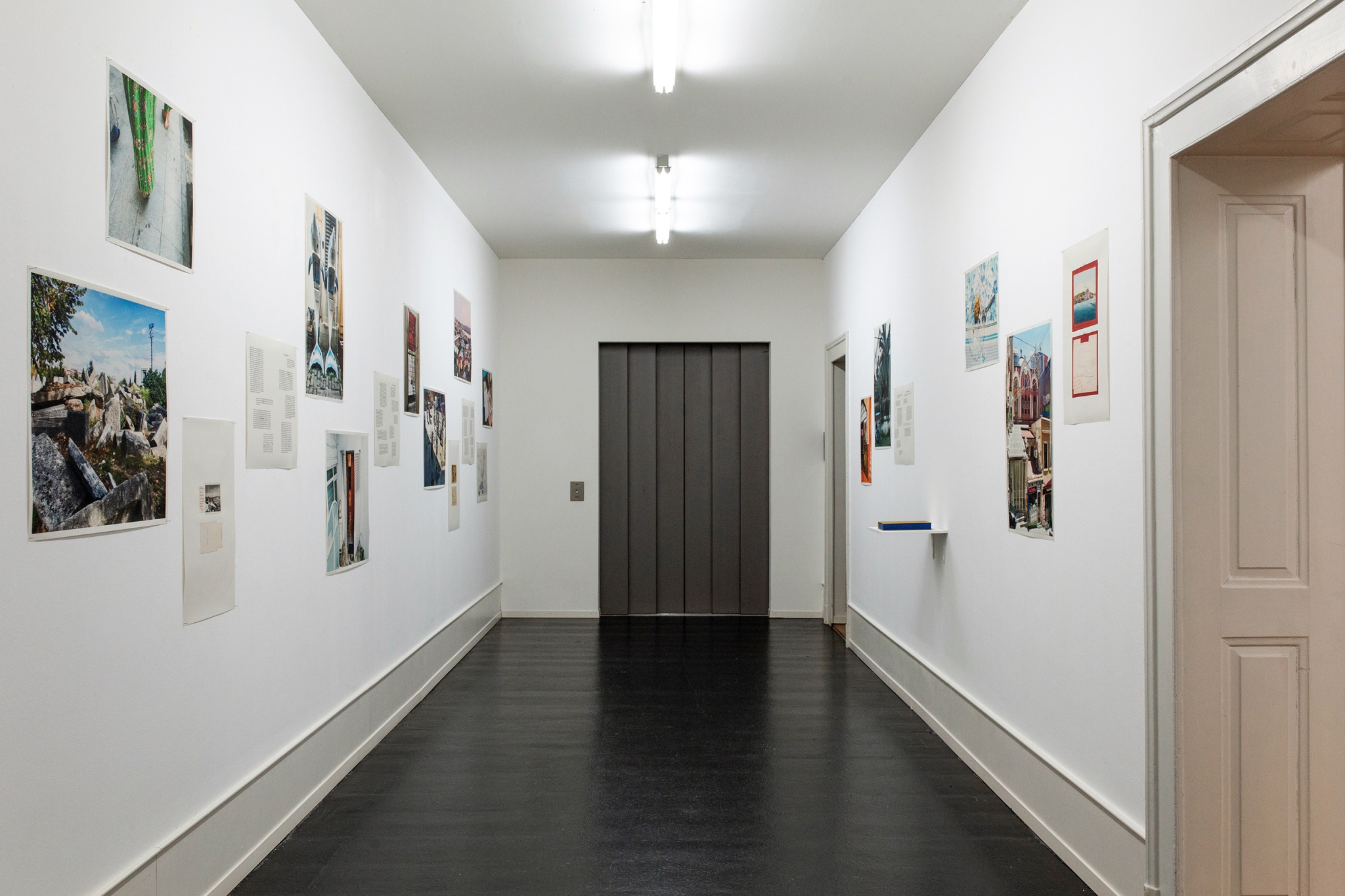
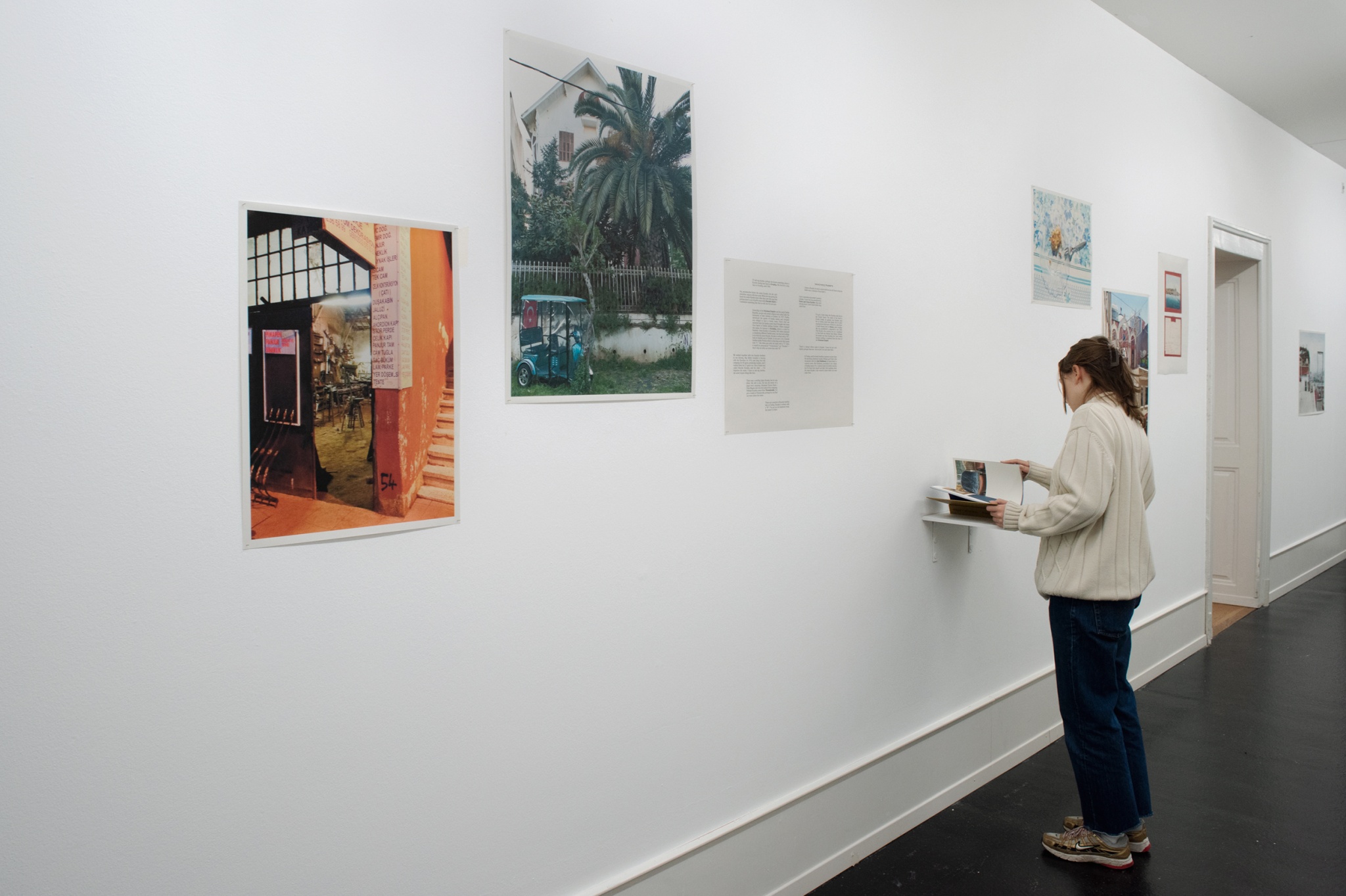


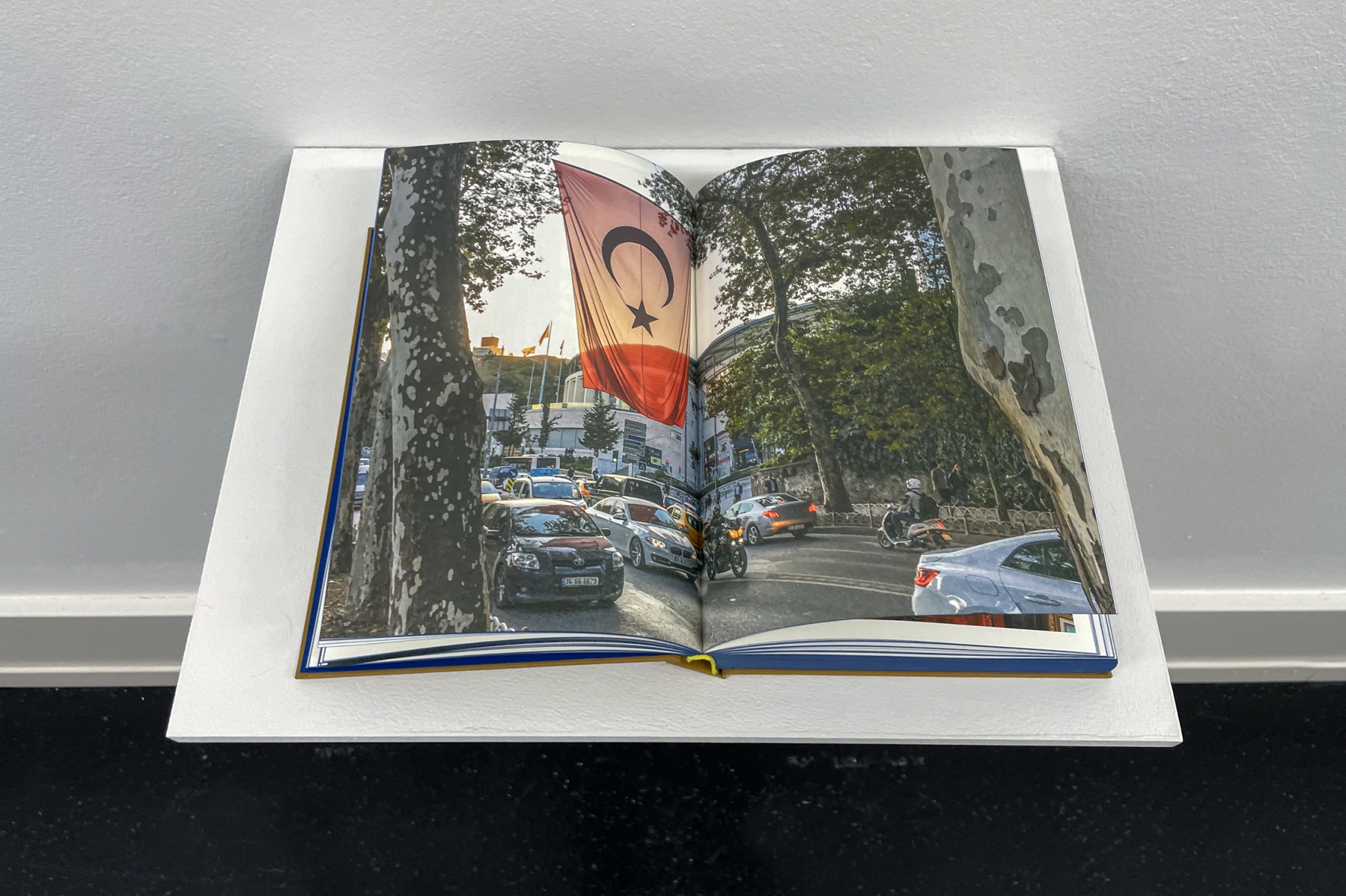
exhibition view, Hidden Istanbul, in the group exhibition, Prix Photoforum 2022, Pasquart Photoforum, Biel, 2022, Foto: Aline Bovard Rudaz
exhibition view, Hidden Istanbul, in the group exhibition, Prix Photoforum 2022, Pasquart Photoforum, Biel, 2022
exhibition view, Hidden Istanbul, in the group exhibition, Prix Photoforum 2022, Pasquart Photoforum, Biel, 2022
detail view, Hidden Istanbul, in the group exhibition, Prix Photoforum 2022, Pasquart Photoforum, Biel, 2022, Foto: Aline Bovard Rudaz
detail view, book: Hidden Istanbul, in the group exhibition, Prix Photoforum 2022, Pasquart Photoforum, Biel, 2022,
Fotografien: Inkjetprint auf gmg ProofMedia Newspaper 76g, Grösse: 77.3 x 58 cm oder 43.5 x 58 cm
Buch: Hidden Istanbul, APE#194, Art Paper Editions, Belgien, 2021
How can something that is concealed be represented, be shown? This is precisely what Françoise Caraco has tried to undertake in the current book ‘Hidden Istanbul’. On a quest to find her ancestors, Françoise Caraco travelled to Istanbul numerous times and talked to people who knew or had known a Caraco—or Karako—or at least remembered the name. This afforded her a unique glimpse of the culture of the Sephardic Jews, who have inhabited the Turkish metropolis for centuries but remain unseen by most eyes.
In ‘Hidden Istanbul’ Françoise Caraco sensitively weaves family memories with her own contemporary photographs of her journey and researches, intermingled with various voices from Istanbul’s Jewish community. The result is a rich and nuanced portrait of a vanishing past and a still-vibrant present of the city from the perspective of a largely unknown segment of its population.
September 2022Gizli Istanbul / Hidden Istanbul
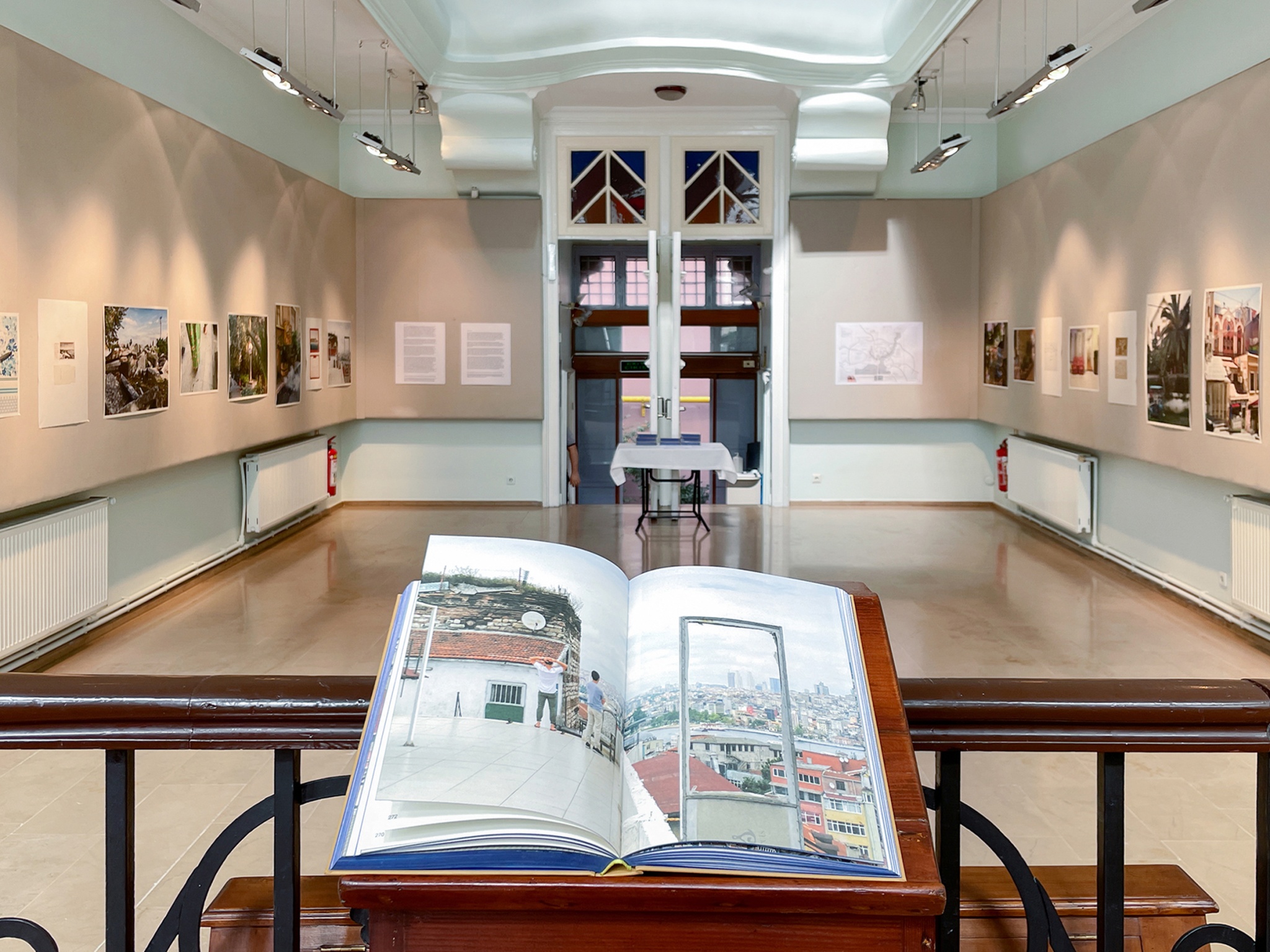
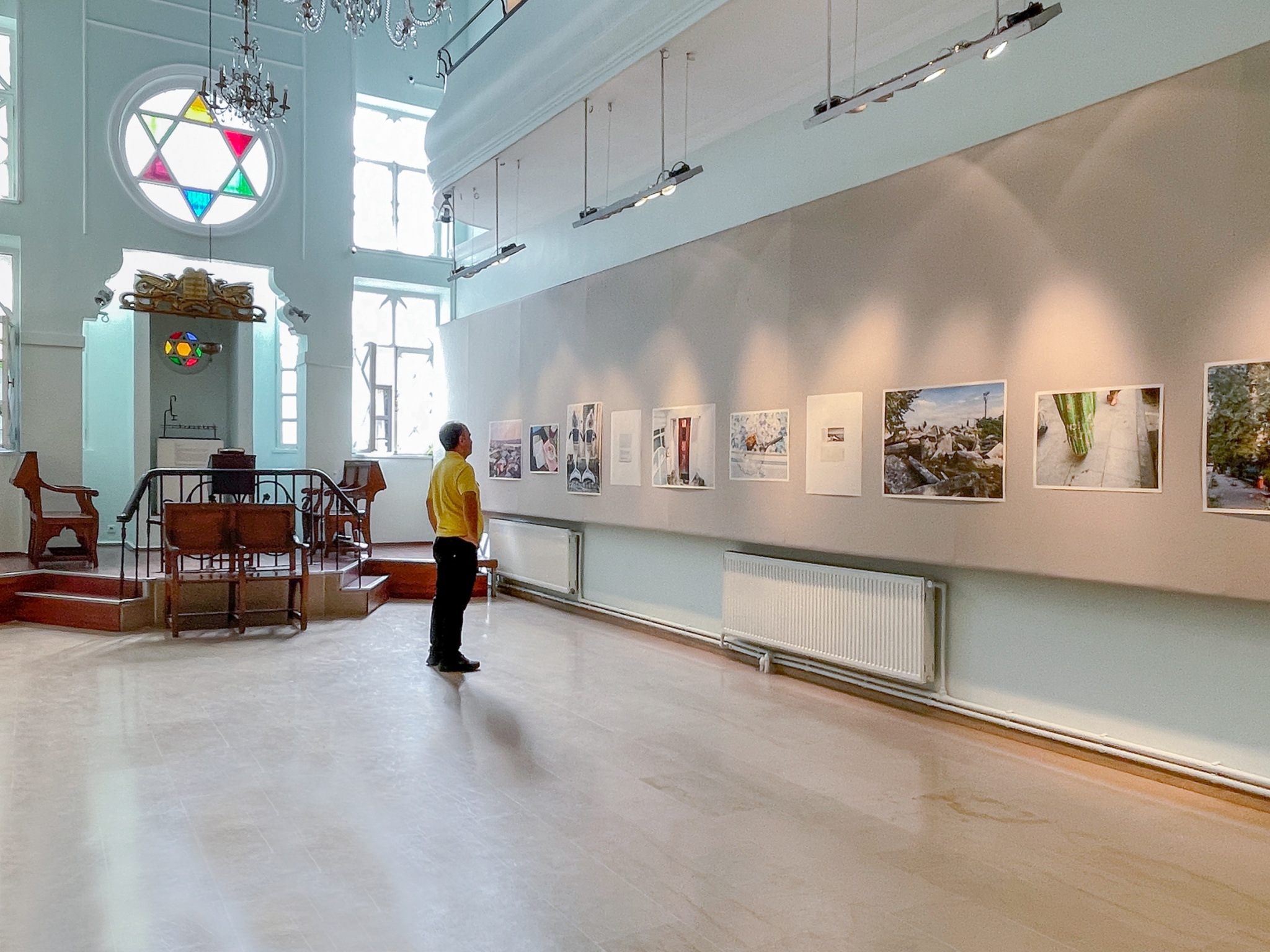


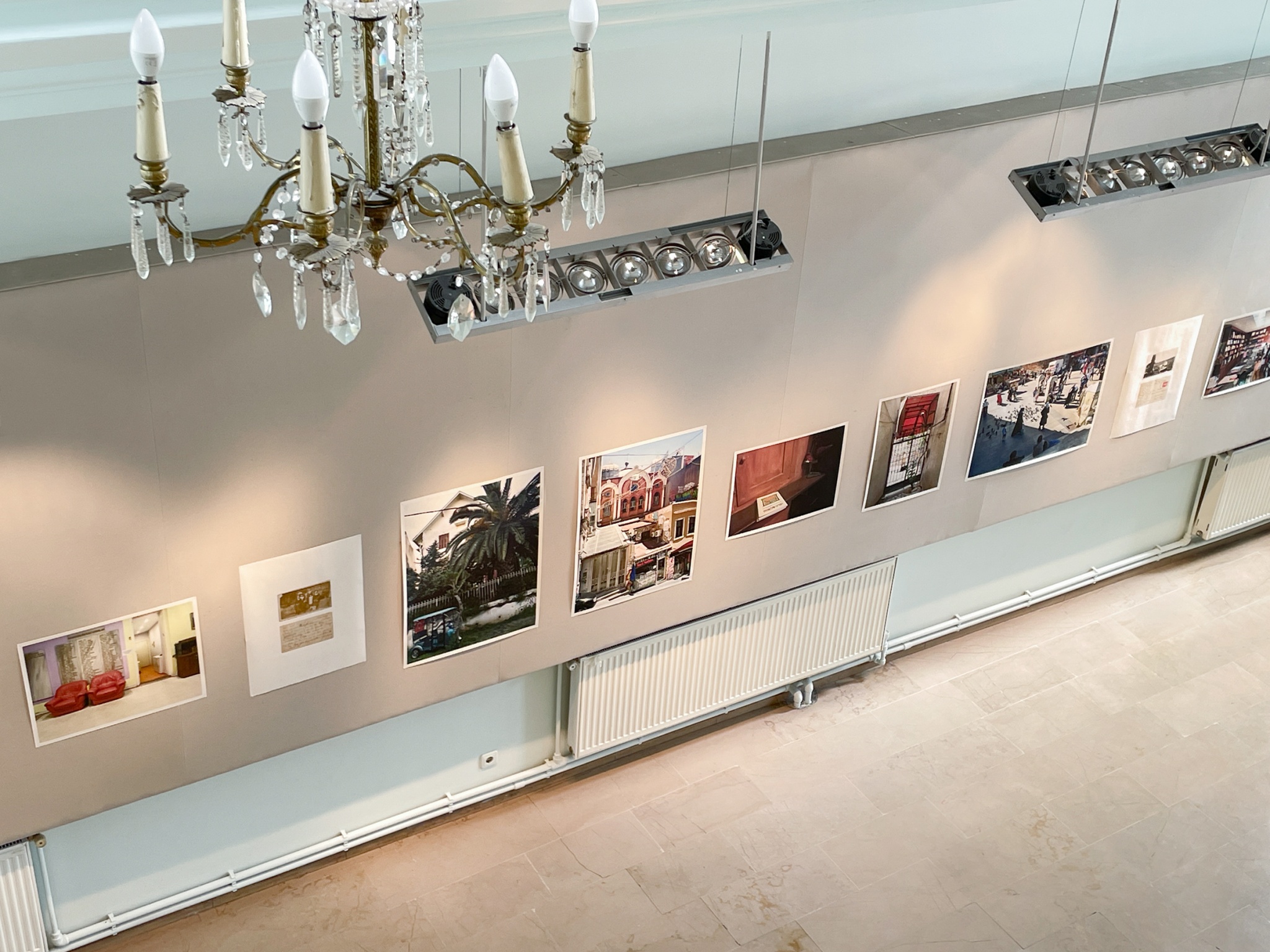
Exhibition view Gizli Istanbul / Hidden Istanbul, Schneidertempel Arts Center, Istanbul 2022
Exhibition view Gizli Istanbul / Hidden Istanbul, Schneidertempel Arts Center, Istanbul 2022
Exhibition view Gizli Istanbul / Hidden Istanbul, Schneidertempel Arts Center, Istanbul 2022
Exhibition view Gizli Istanbul / Hidden Istanbul, Schneidertempel Arts Center, Istanbul 2022
Exhibition view Gizli Istanbul / Hidden Istanbul, Schneidertempel Arts Center, Istanbul 2022
Exhibition view Gizli Istanbul / Hidden Istanbul, Schneidertempel Arts Center, Istanbul 2022
Exhibition view Gizli Istanbul / Hidden Istanbul, Schneidertempel Arts Center, Istanbul 2022
Inkjetprint auf gmg ProofMedia Newspaper 76g, 77.3 x 58 cm oder 43.5 x 58 cm
Book: Hidden Istanbul, APE#194, Art Paper Editions, Belgien, 2021
The book HIDDEN ISTANBUL serves as the basis for the exhibition at the Schneidertempel Arts Center. Photographs and images of archival material are printed in inkjet on thin newsprint and hung on the walls in equal measure as a kind of documentary tracing of Istanbul Jewish life. The statements from the interviewees can be found in the book.
How can something that is concealed be represented, be shown? This is precisely what Françoise Caraco has tried to undertake in the current book HIDDEN ISTANBUL. On a quest to find her ancestors, Françoise Caraco travelled to Istanbul numerous times and talked to people who knew or had known a Caraco—or Karako—or at least remembered the name. This afforded her a unique glimpse of the culture of the Sephardic Jews, who have inhabited the Turkish metropolis for centuries but remain unseen by most eyes. In ‘Hidden Istanbul’ Françoise Caraco sensitively weaves family memories with her own contemporary photographs of her journey and researches, intermingled with various voices from Istanbul’s Jewish community. The result is a rich and nuanced portrait of a vanishing past and a still-vibrant present of the city from the perspective of a largely unknown segment of its population.
December 2021Hidden Istanbul

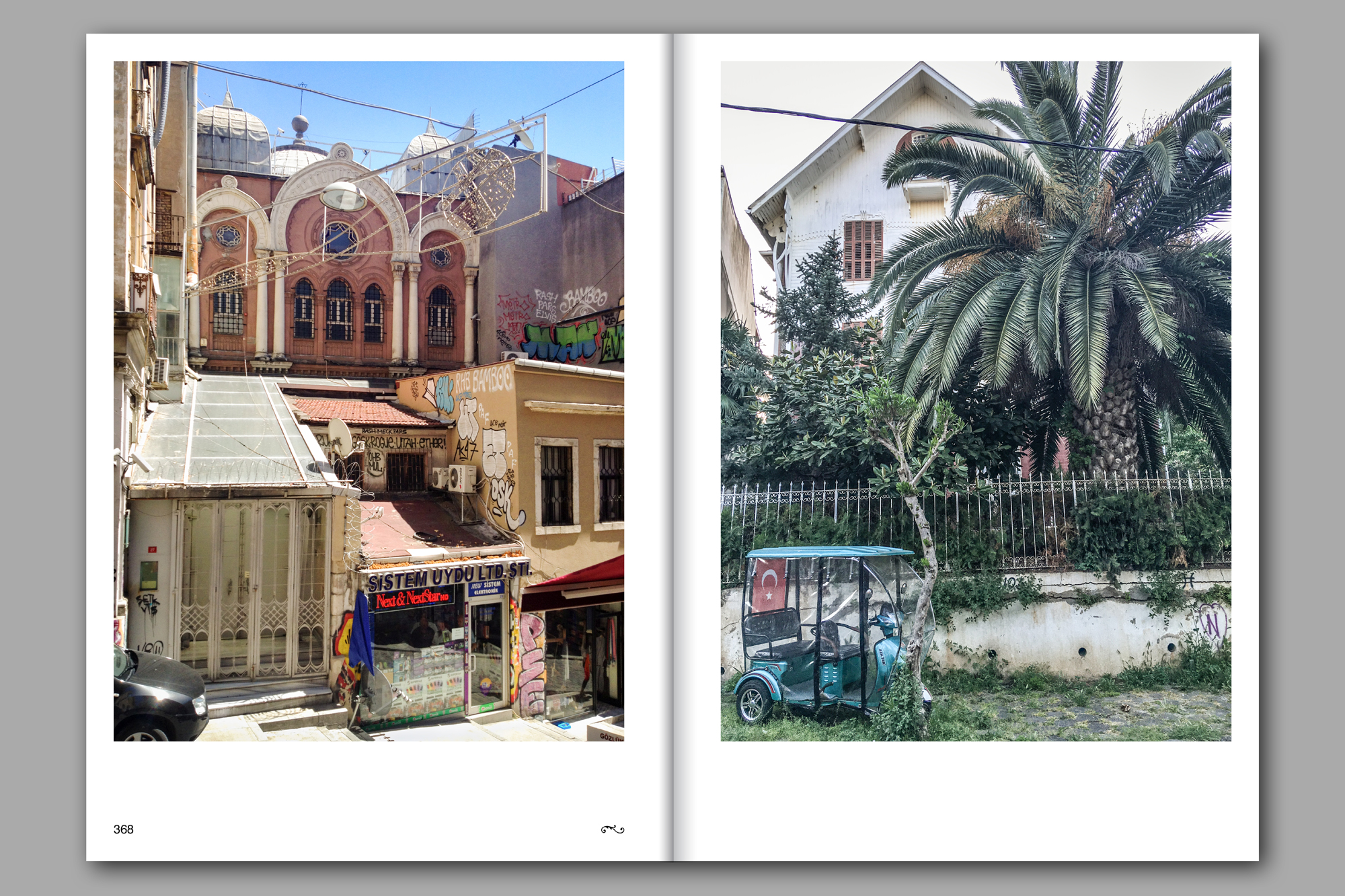


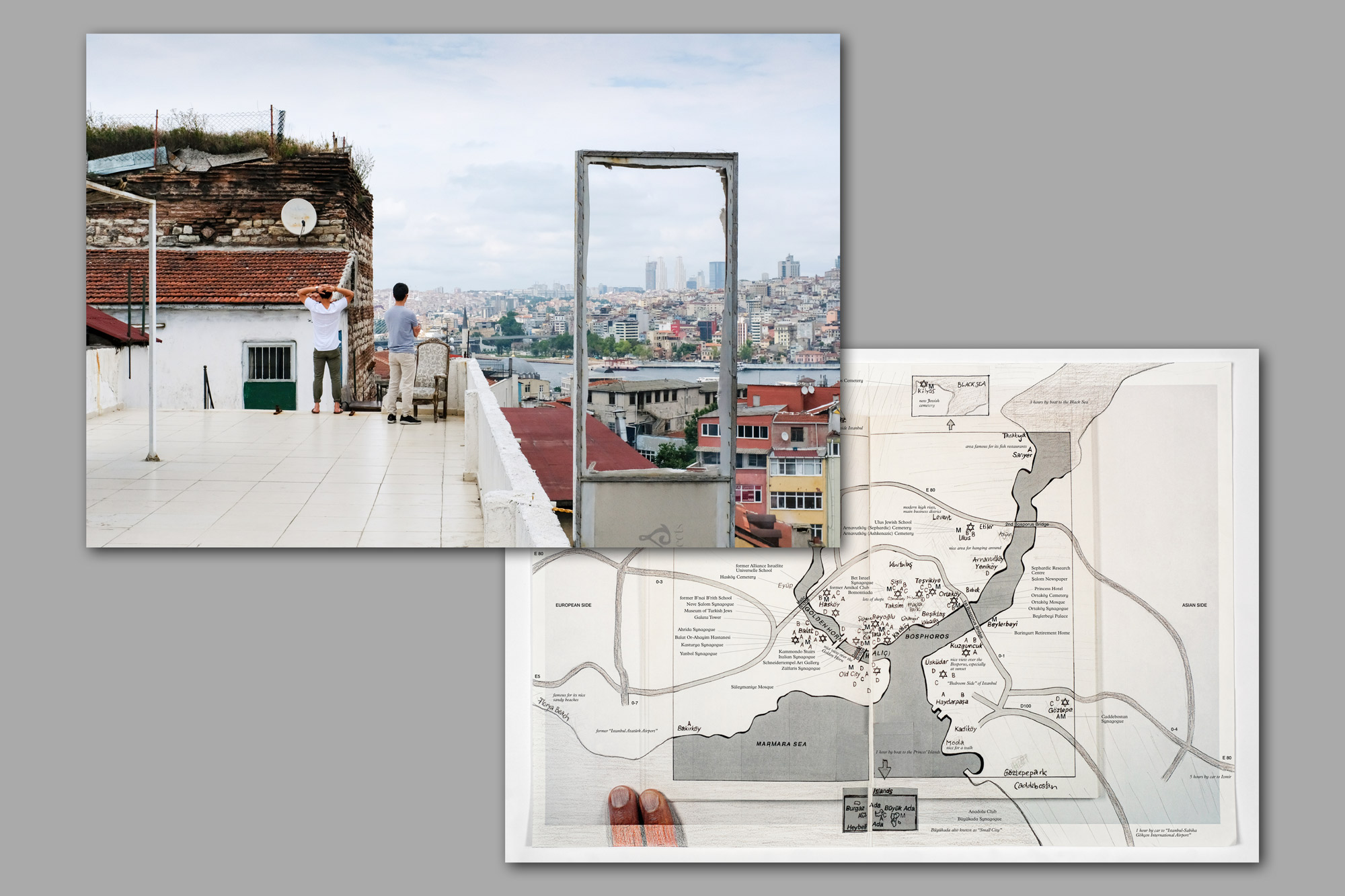
Hidden Istanbul, APE#194, Art Paper Editions, Belgien, 2021
Hidden Istanbul, APE#194, Art Paper Editions, Belgien, 2021
Hidden Istanbul, APE#194, Art Paper Editions, Belgien, 2021
Hidden Istanbul, APE#194, Art Paper Editions, Belgien, 2021
Hidden Istanbul, APE#194, Art Paper Editions, Belgien, 2021
Hidden Istanbul, APE#194, Art Paper Editions, Belgien, 2021
Hidden Istanbul, APE#194, Art Paper Editions, Belgien, 2021
Hidden Istanbul, APE#194, Art Paper Editions, Belgien, 2021
Hidden Istanbul, APE#194, Poster, Art Paper Editions, Belgien, 2021
Hardcover 17 × 24 cm, 404 Seiten, 263 Farbfotografien, Language: English, ISBN 9789493146716
Design & Editing: Lien Van Leemput & Françoise Caraco
Design: Lien Van Leemput & Françoise Caraco for 6'56" Art Paper Editions, Belgien, 2021.
Each book comes with a two-sided poster.
How can something that is concealed be represented, be shown? This is precisely what Françoise Caraco has tried to undertake in the current book Hidden Istanbul. On a quest to find her ancestors, Françoise Caraco travelled to Istanbul numerous times and talked to people who knew or had known a Caraco—or Karako—or at least remembered the name. This afforded her a unique glimpse of the culture of the Sephardic Jews, who have inhabited the Turkish metropolis for centuries but remain unseen by most eyes.
In Hidden Istanbul Françoise Caraco sensitively weaves family memories with her own contemporary photographs of her journey and researches, intermingled with various voices from Istanbul’s Jewish community. The result is a rich and nuanced portrait of a vanishing past and a still-vibrant present of the city from the perspective of a largely unknown segment of its population.
November 2019Unhidden Secrets
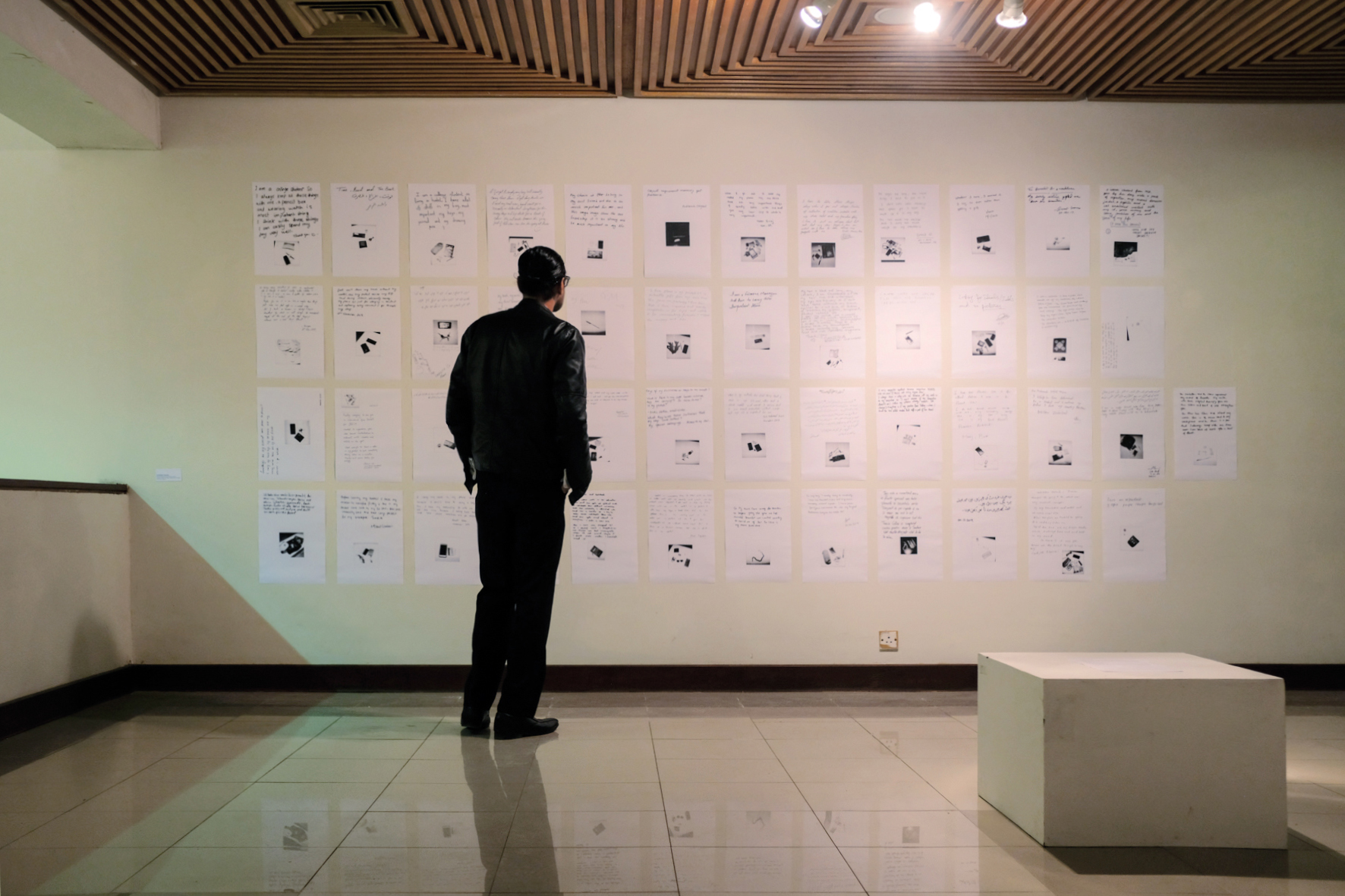
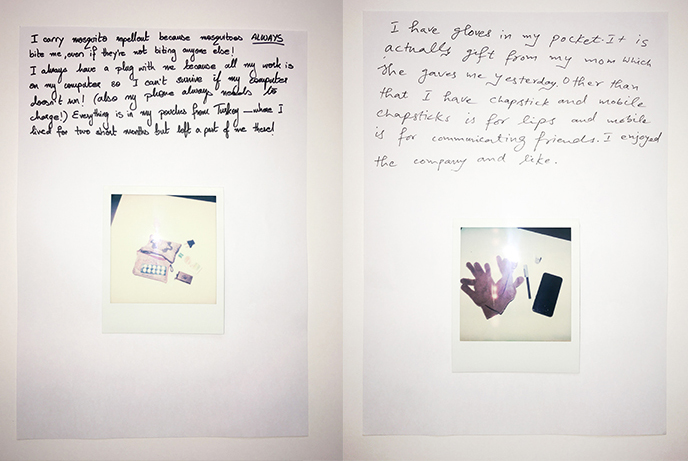
Exhibition view, Unhidden Secrets, in the group exhibition, Islamabad – Artfestival, Islambad, 2019
Detailansicht, Unhidden Secrets, in der Gruppenausstellung, Islamabad–Artfestival, Islambad, 2019
Polaroids and Text fragments printed on A3 Laserprints
The artists Françoise Caraco and Eliane Rutishauser worked on site in collaboration with the public. They posed the question: What personal possessions in pockets, handbag or wallet do you carry around throughout the day? The layed out items were photographed and in addition, the participants wrote something which exended the picture with a story, an incident or memories the particular objects contains for their owners.
The same questions have been posed to participants in Switzerland on the occassion of the Kunst Zürich Artfair 2019.
The statements and the polaroid pictures from both on site projects are assebled on the walls of the Gallery.
The polaroids provide the viewer with less than an accurate picture. Rather they give an idea of the articles photographed and thus, toghether with the writen accounts, open an imaginative space for the observer.
The artists are interested on the cultural coloration of the word - picture combinations and on seemingly banal activities which tells of the everyday life on different parts of the world today.
November 2013Reisebericht, Fremde Erinnerungen, 2013
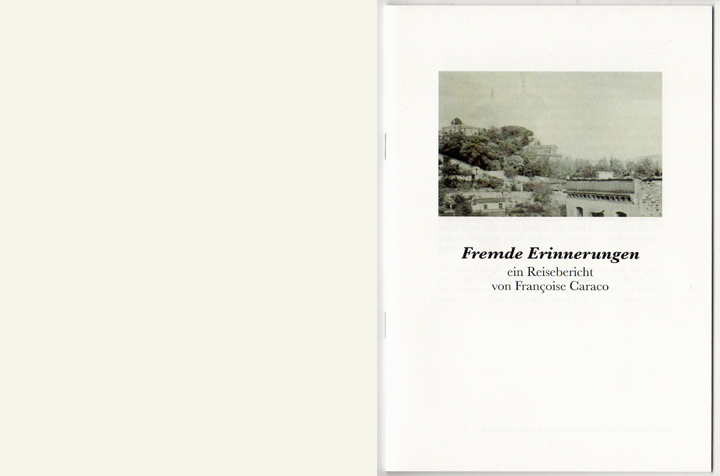
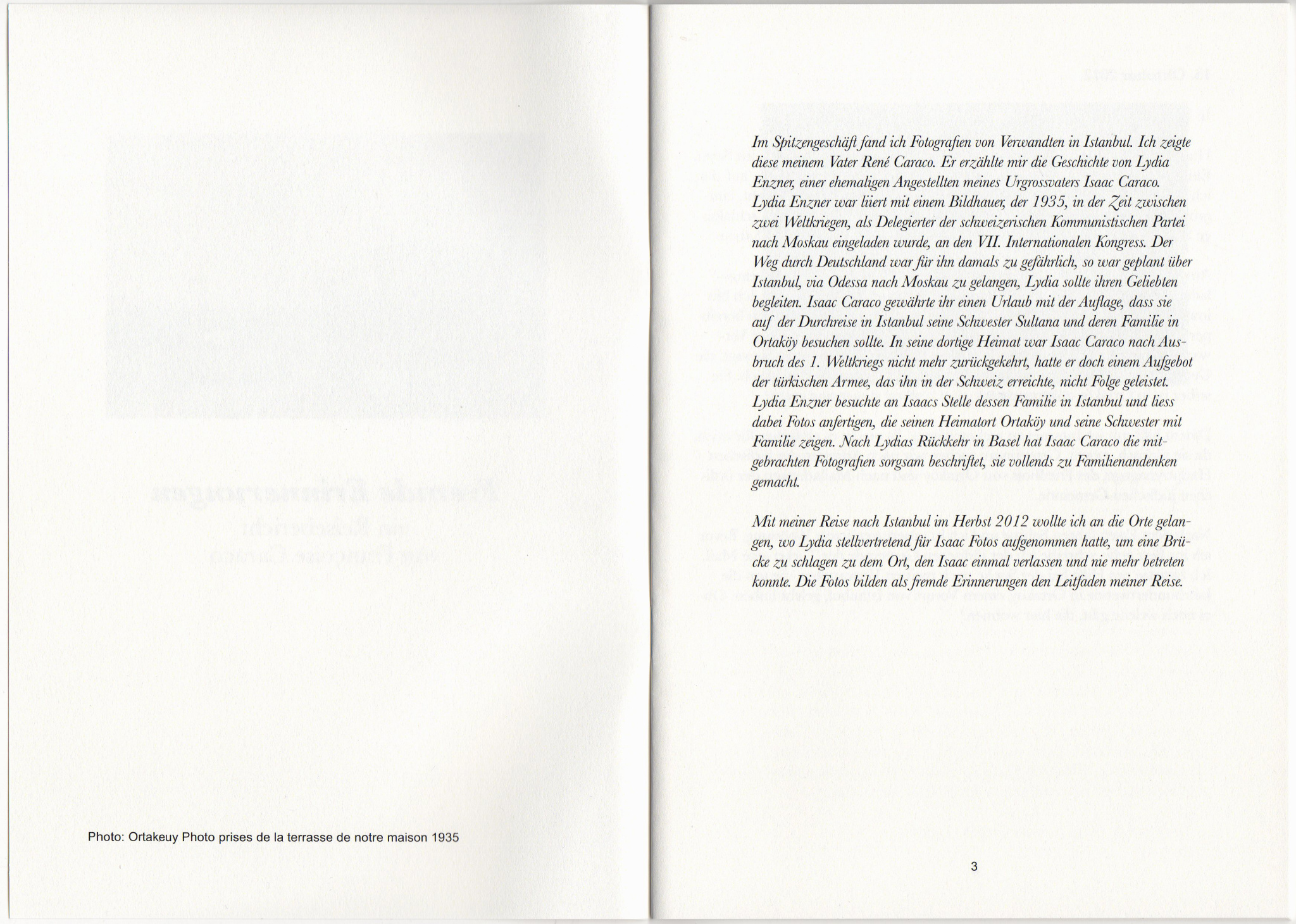
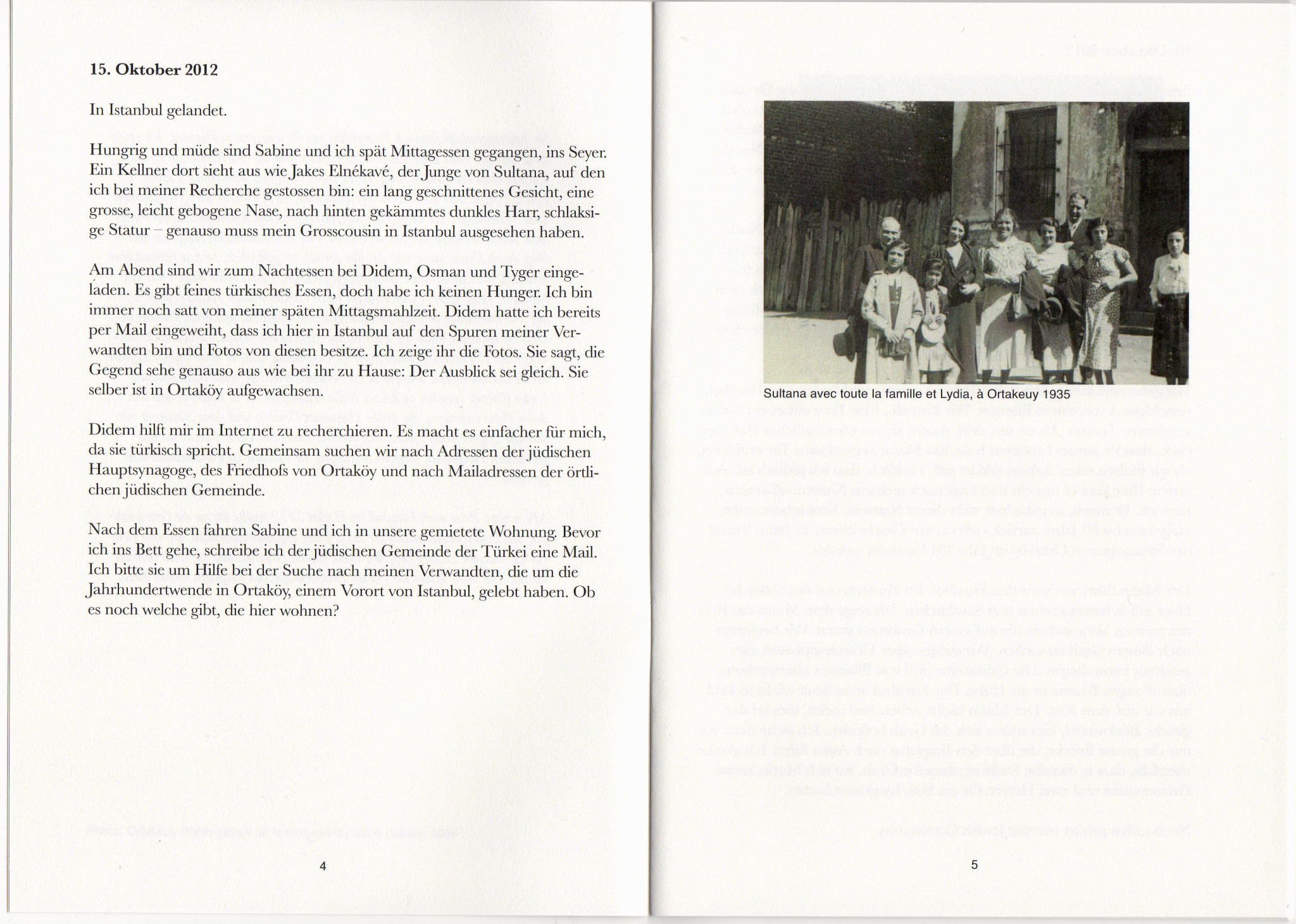
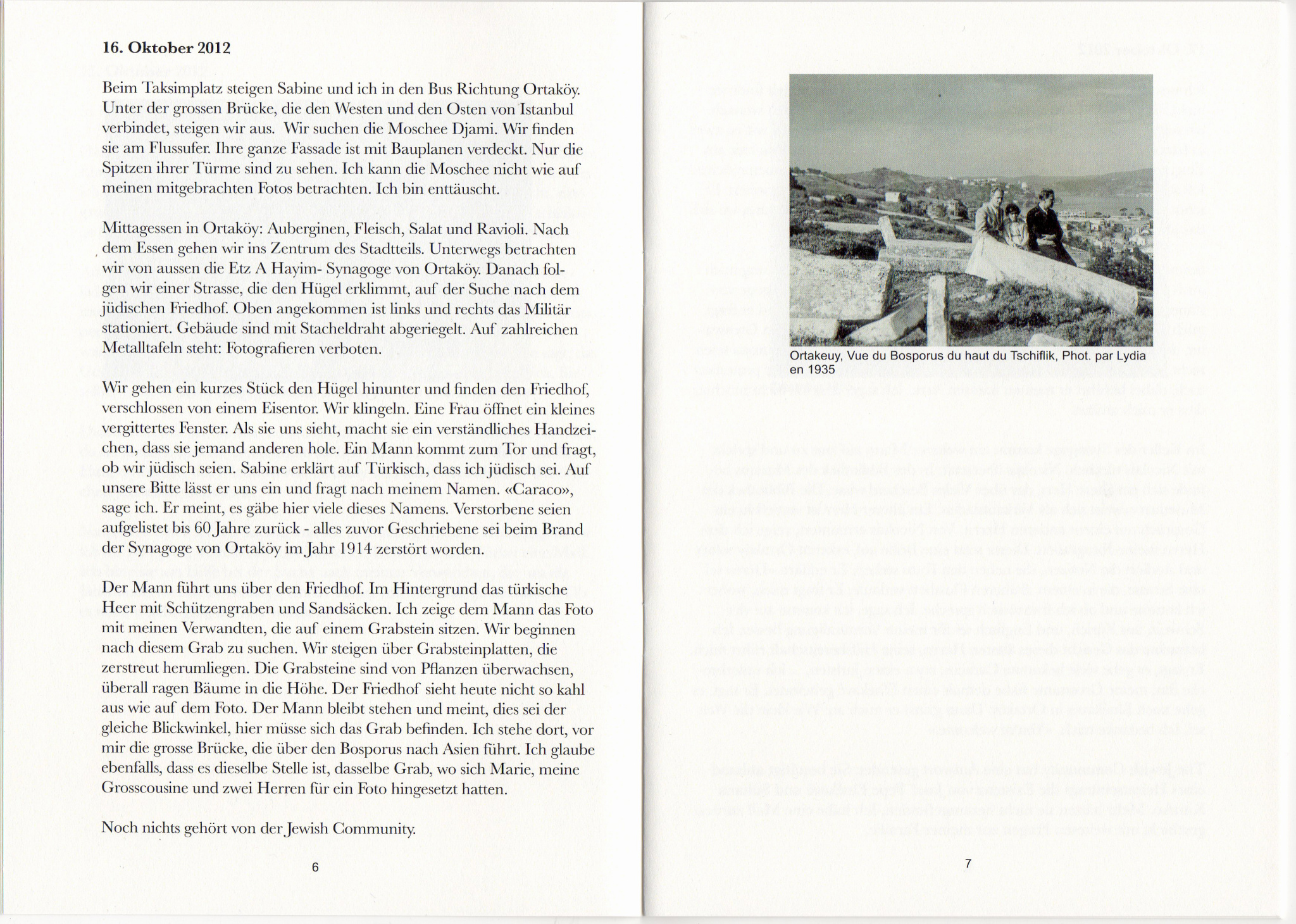
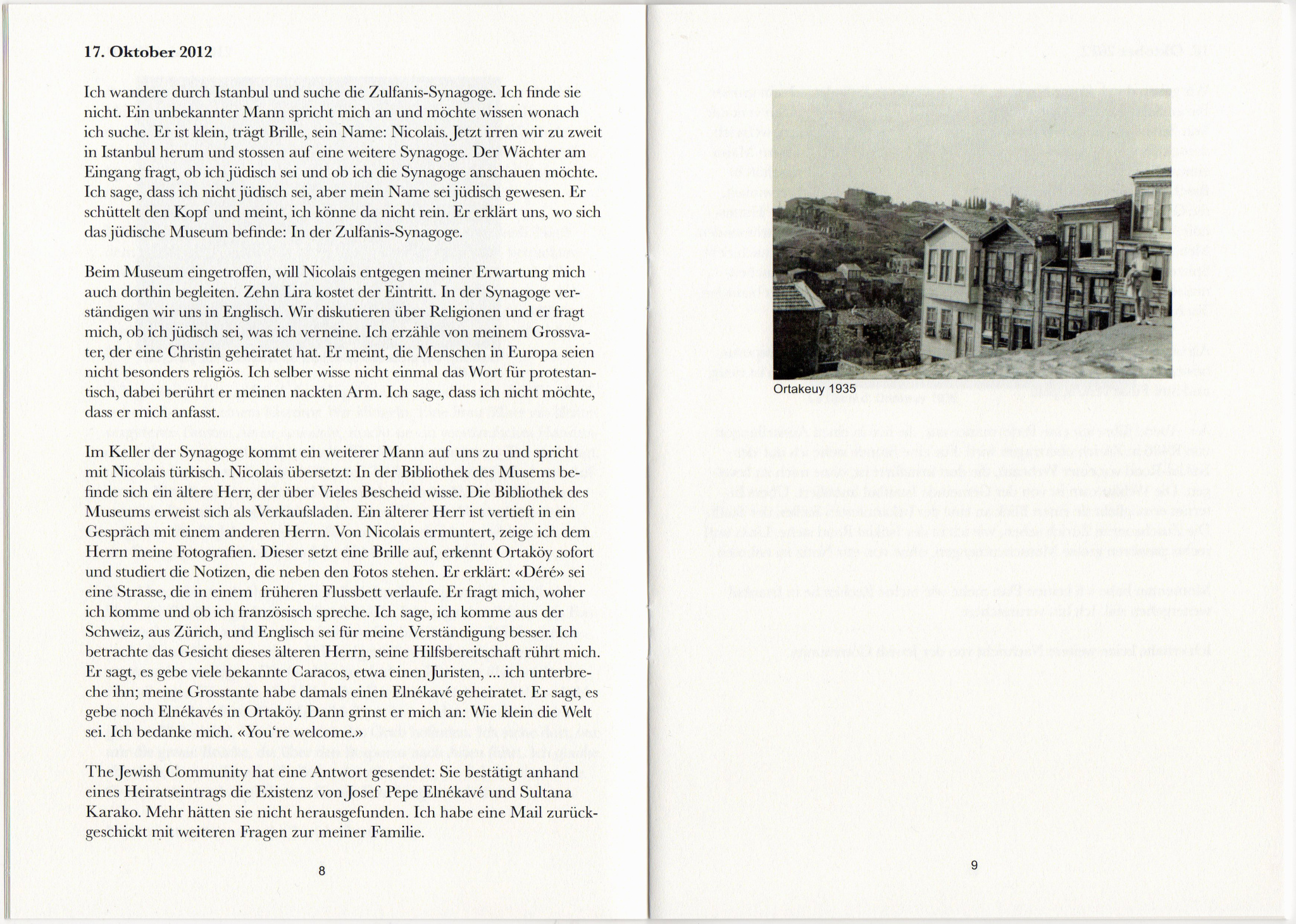
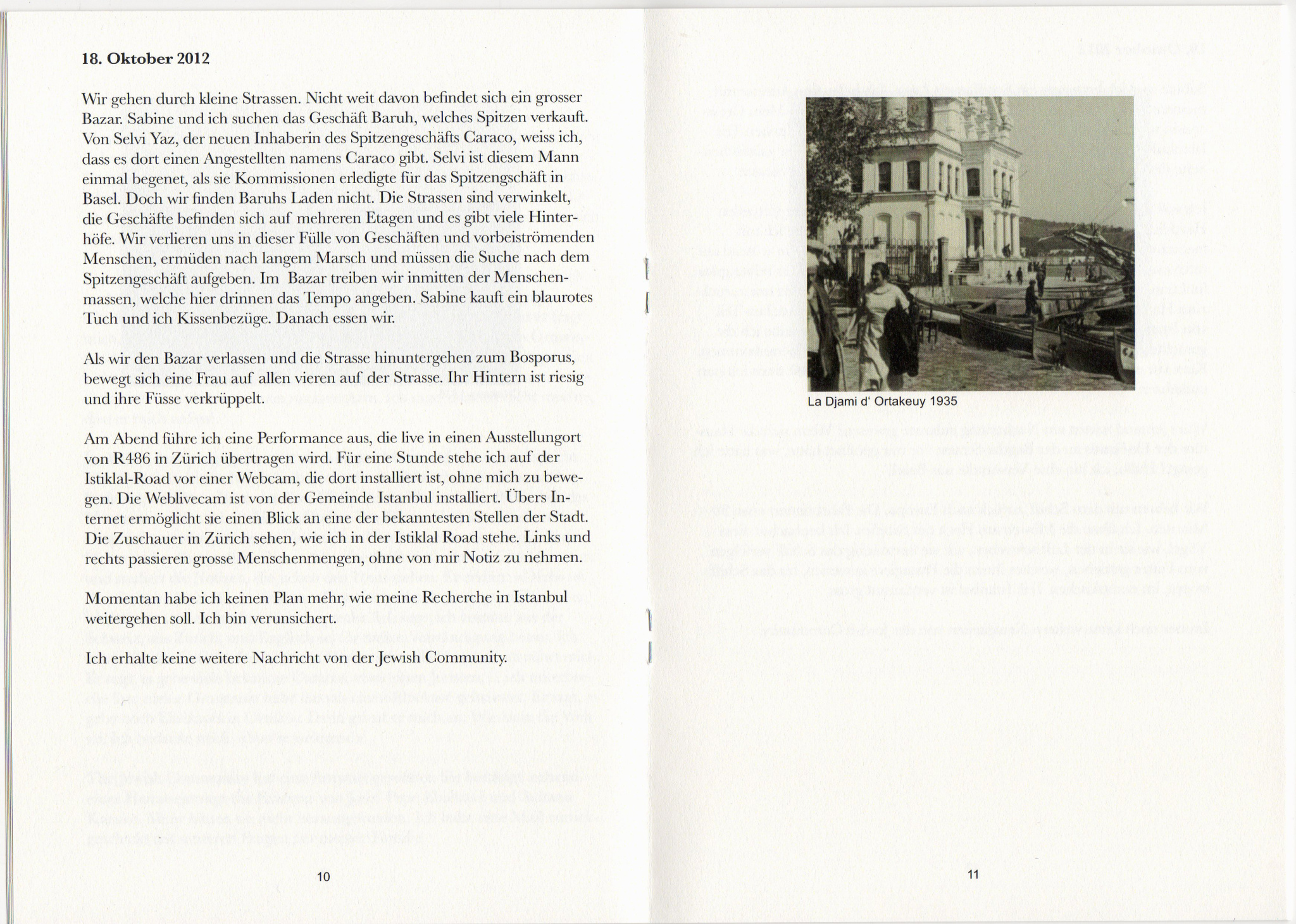
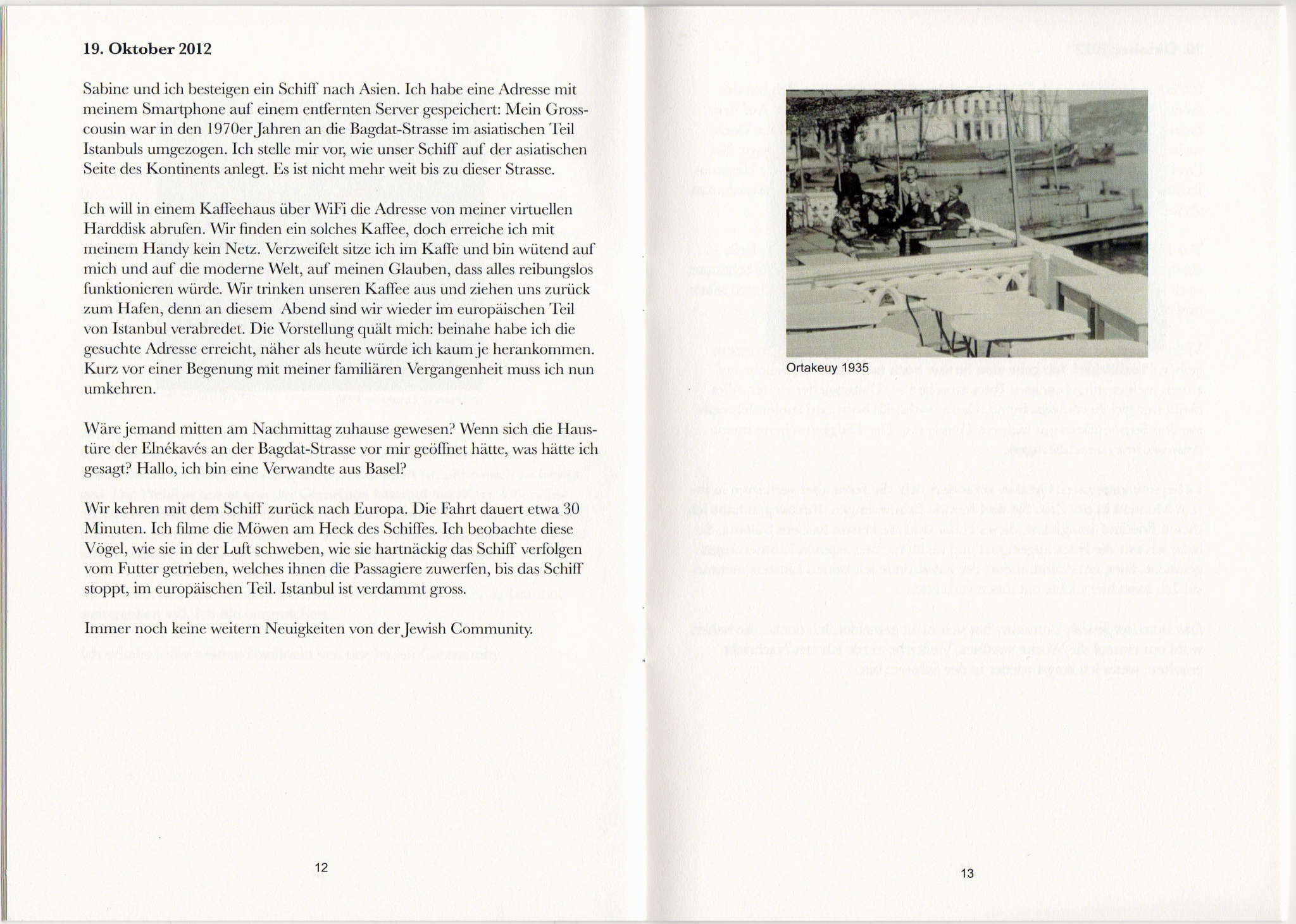
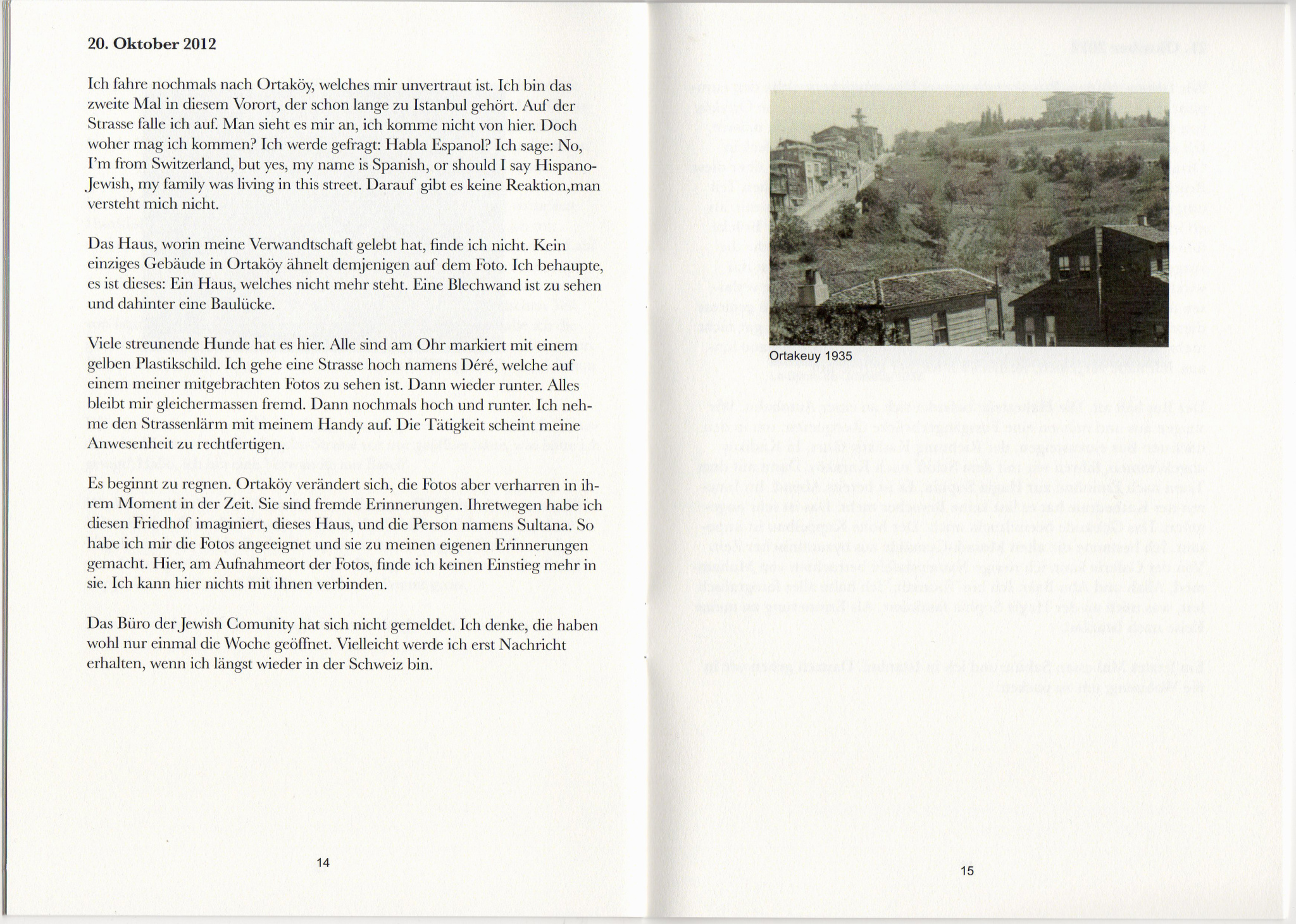
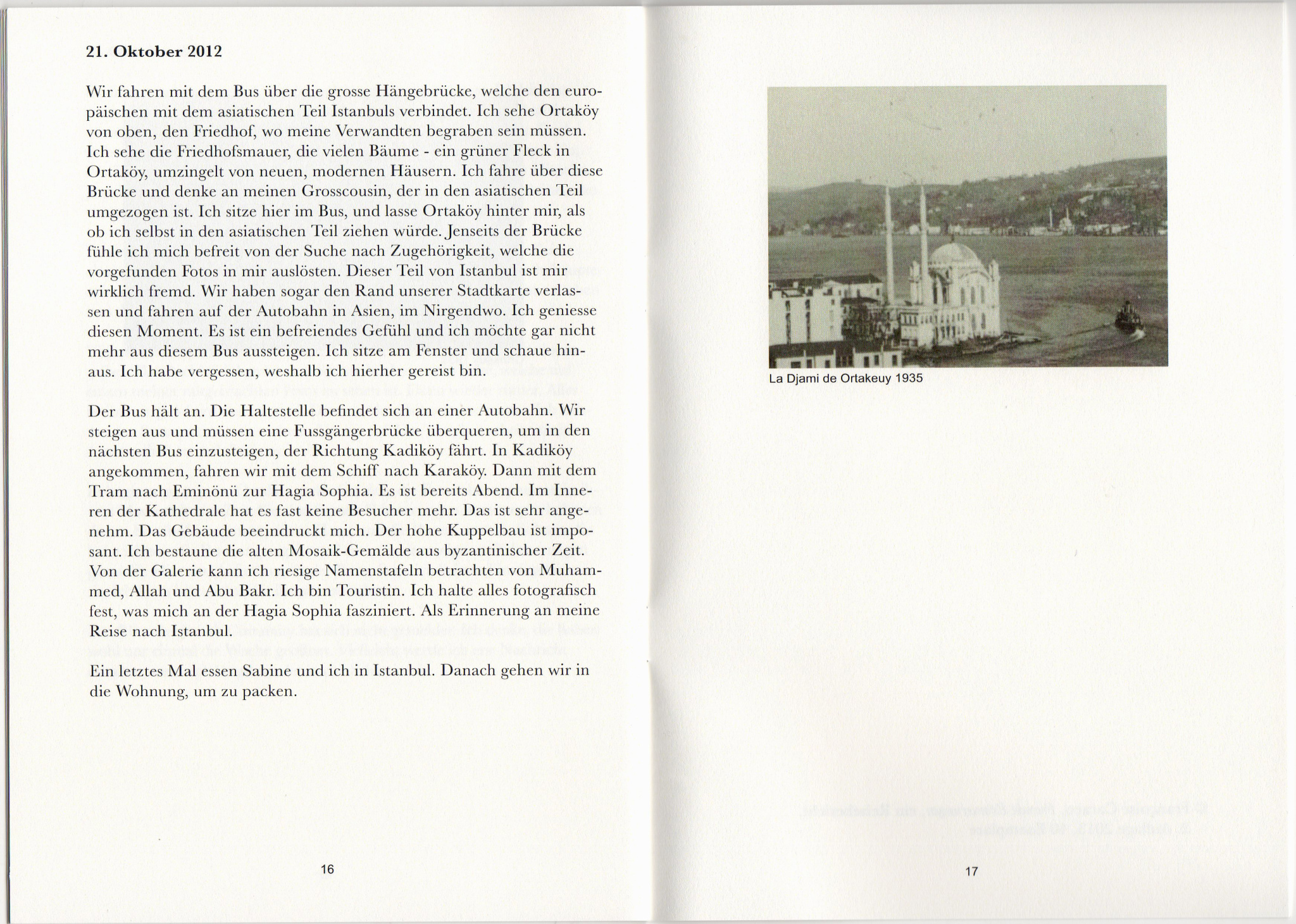
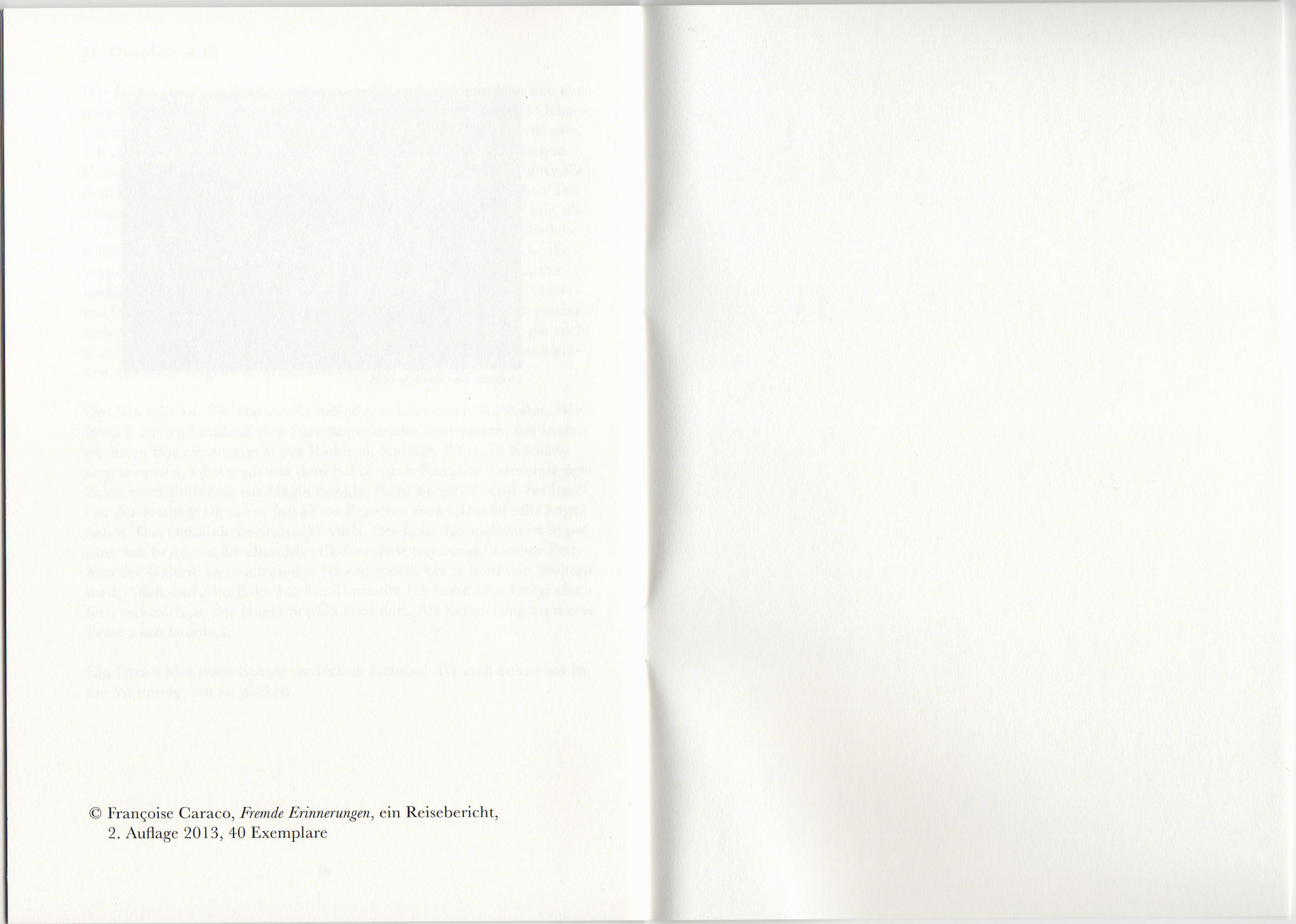
Travelogue A5: Fremde Erinnerungen, Laserprint, 2013
Travelogue A5: Fremde Erinnerungen, Laserprint, 2013
Travelogue A5: Fremde Erinnerungen, Laserprint, 2013
Travelogue A5: Fremde Erinnerungen, Laserprint, 2013
Travelogue A5: Fremde Erinnerungen, Laserprint, 2013
Travelogue A5: Fremde Erinnerungen, Laserprint, 2013
Travelogue A5: Fremde Erinnerungen, Laserprint, 2013
Travelogue A5: Fremde Erinnerungen, Laserprint, 2013
Travelogue A5: Fremde Erinnerungen, Laserprint, 2013
Travelogue A5: Fremde Erinnerungen, Laserprint, 2013
November 2012Circumstances (version 1)
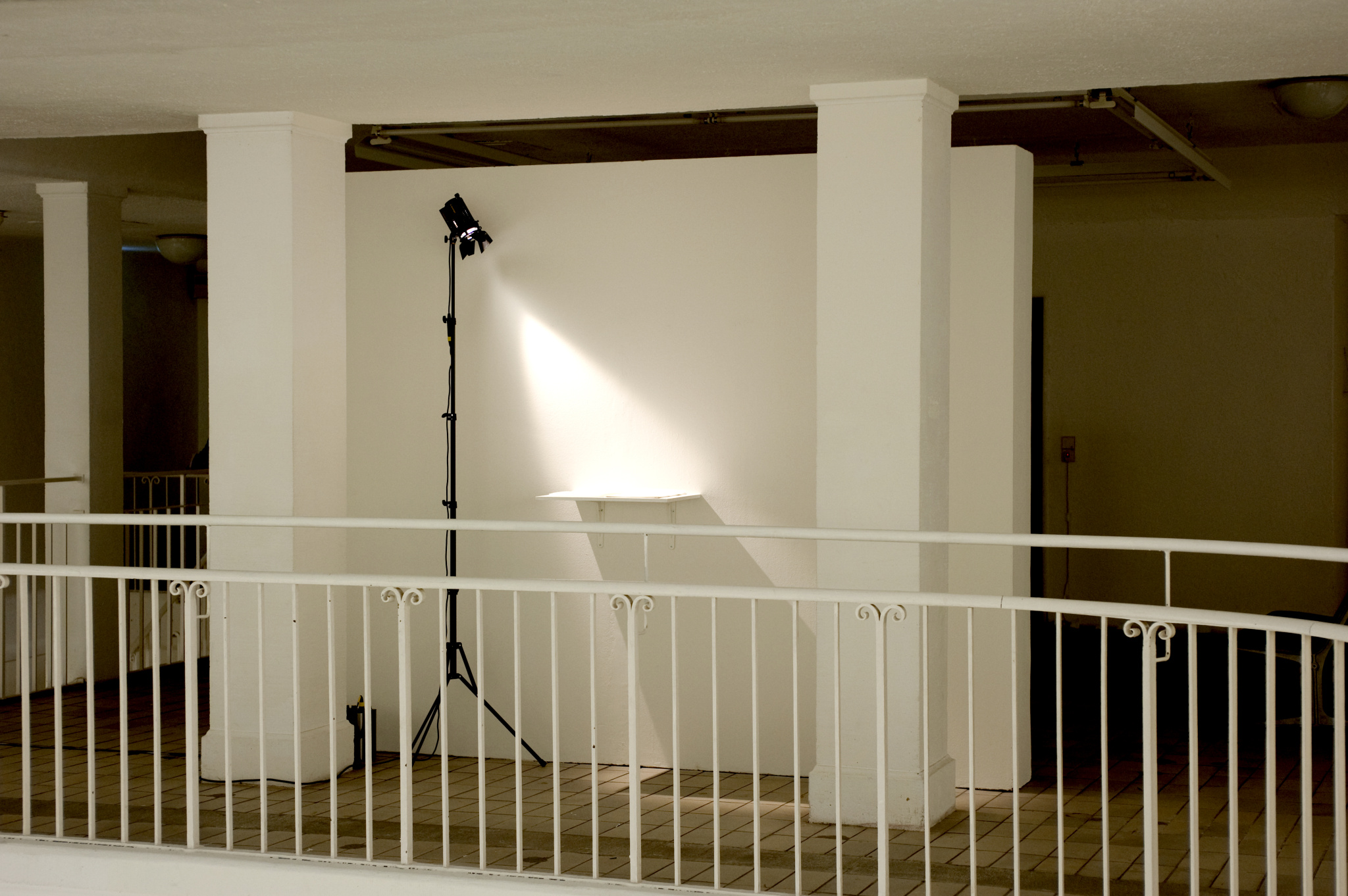
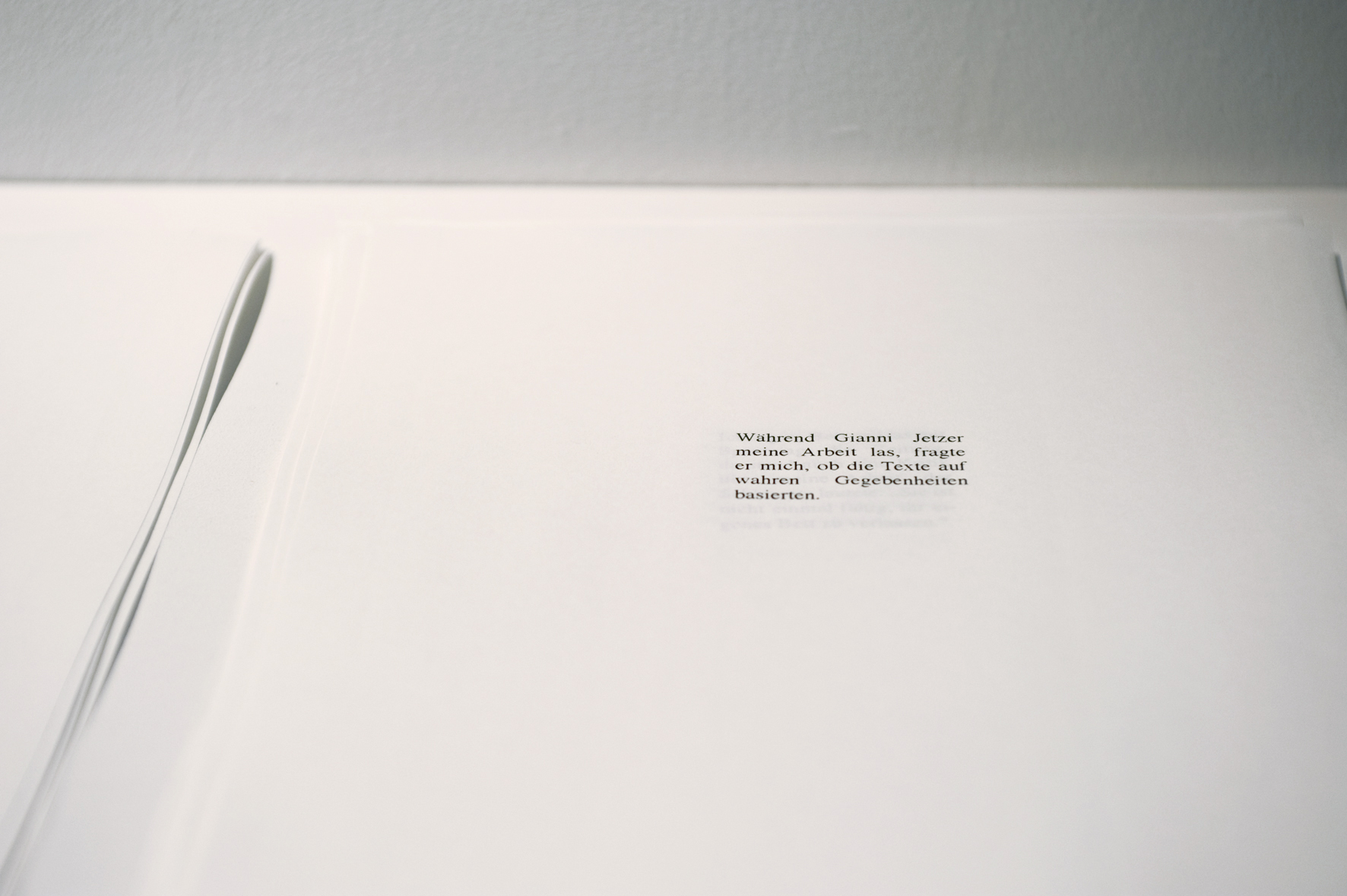
Exhibition view, Gegebenheiten, Kunstverein Freiburg, Freiburg im Breisgau, 2012
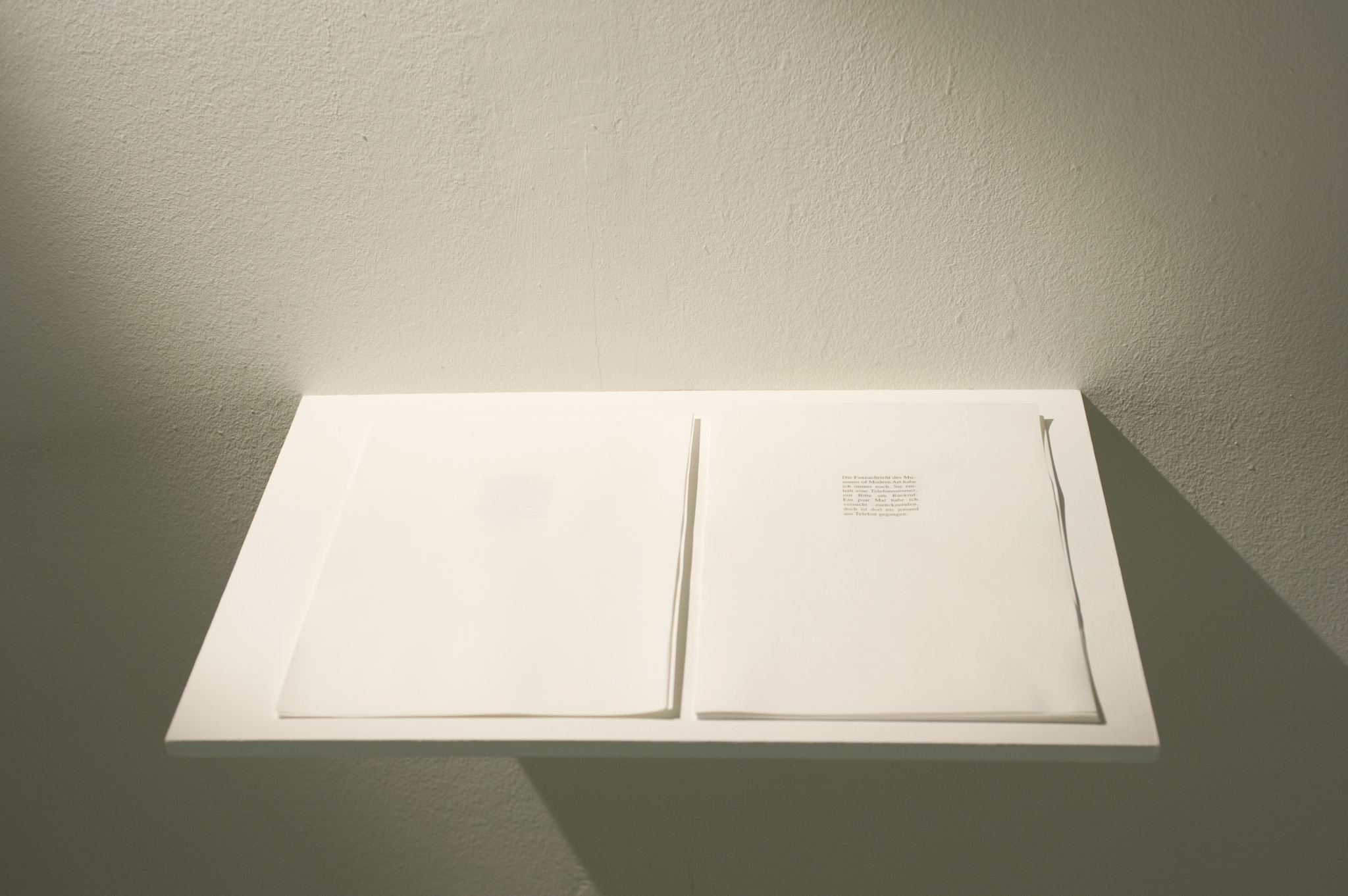
Detail view, Gegebenheiten, Freiburg im Breisgau, 2012
Detail view, Gegebenheiten, Freiburg im Breisgau, 2012
Gegebenheiten // Circumstances (2012), work in progress
A4, laserprint on recycled paper
Françoise Caraco’s work Gegebenheiten consists of loose white sheets on which short stories are printed in the form of small columns. The short texts are language depictions of simple and personal incidents. Artists, curators, collectors, gallerists, critics and exhibition visitors – all of these figures from an art context are alloted their own roles in the piece and become protagonists of fleeting enactments that could also be pieces of larger stories. The mood switches from deep ernestness to light-hearted persiflage, again and again raising a smile from the readers. The work – described by the artists as ‘work in progress’, and as such susceptible to extension by means of further observations – represents a form of everyday phenomenology of the art context. Whether universal statements about a whole milieu can be distilled from the descriptions of these singular circumstances is left to beholder.
Text: Irene Grillo, 2012